The Landlord Gas Safety Record (CP12) Explained: Every 12 Months, 28 Days, Two Years
A landlord gas safety record is the document a Gas Safe registered engineer produces after checking every gas appliance, fitting and flue a landlord provides in a rented home. Most people still call it a CP12 — the name of the old form — or a "gas safety certificate". The law behind it is regulation 36 of the Gas Safety (Installation and Use) Regulations 1998, and the rule is simple: a check at least every 12 months, a copy to your tenants within 28 days, and the record kept for two years.
That's the short version. The rest of this page is who it applies to, the clocks you're actually measured against, what the engineer does on the day, how to read what comes back, and what a landlord can see in the eleven months between checks.
Who needs one
| Where | The rules | Who |
|---|---|---|
| England, Scotland and Wales | Gas Safety (Installation and Use) Regulations 1998, regulation 36 | Landlords of residential property, including HMOs and holiday lets |
| Northern Ireland | Gas Safety (Installation and Use) Regulations (Northern Ireland) 2004 | The same duty: an annual check and a copy to tenants |
"Residential" is broader than a flat on an assured shorthold tenancy. HSE is explicit that the duty covers rented holiday accommodation too — chalets, cottages, flats, caravans and narrow boats.
If you own the home you live in, nothing requires a gas safety record, though a yearly service is still the best way to keep a boiler safe and its warranty valid.
The clocks
Almost every gas safety prosecution comes down to one of these dates.
| What | When |
|---|---|
| The safety check | At least every 12 months |
| A new appliance or flue you provide | First check within 12 months of installation |
| Early checks | Can be done from 10 to 12 months after the last one and still keep the original deadline (the 2018 "MOT-style" change) |
| Copy to each existing tenant | Within 28 days of the check |
| Copy to a new tenant | Before they move in |
| Keep the record | For at least 2 years |
The early-check window matters more than it looks. Before April 2018, a check done a month early reset the whole cycle a month earlier, so the deadline crept forward every year. Now a check in months 10 to 12 keeps your existing anniversary. Book it for month 11 and a cancelled appointment doesn't put you in breach.
Important
Missing the 12 months is the breach, not missing the paperwork. An engineer's record dated thirteen months after the last one is evidence of a gap. Put the deadline — not the last check date — in your calendar.
What the engineer checks
The check is done by a Gas Safe registered engineer qualified for the appliances in the property. Ask to see their Gas Safe ID card: the back lists the work they're qualified to do, and a boiler qualification doesn't automatically cover a gas fire.
For each gas appliance and flue you provide, the engineer looks at:
- Whether the flue works — that combustion products are carried safely outside, usually with a flue flow or spillage test
- The supply of combustion air — the ventilation the appliance needs, and whether it has been blocked, painted over or built over
- Operating pressure or heat input — that the appliance burns gas at the rate its maker specifies
- That it's working safely — flame picture, safety devices, ignition, and anything visibly wrong
Most engineers also test the installation pipework for leaks while they're there.
What the record must say
The record itself is short. It has to show:
- The date of the check and the address of the property
- The landlord's name and address (or the agent's)
- Each appliance and flue checked, and where it is
- Any defect found and what was done about it
- The engineer's name, Gas Safe registration number and signature — HSE accepts an electronic signature, a scanned signature or a payroll number, as long as the engineer can be identified
There's no single compulsory form. "CP12" was the name of the form when the register was run by CORGI; Gas Safe took over in 2009, and engineers now use their own paper or digital records. The name stuck.
Reading what comes back
When an engineer finds something wrong, they classify it under the gas industry's procedure for unsafe situations. You'll usually see one of three labels:
| Label | What it means | What happens |
|---|---|---|
| Immediately Dangerous (ID) | A danger to life or property right now | The engineer disconnects the appliance — with your consent, or the person responsible's — and attaches a warning notice |
| At Risk (AR) | Not dangerous this minute, but could become so | The engineer turns it off, with consent, and labels it; it must be repaired before it's used again |
| Not to Current Standards (NCS) | Installed to an older standard, not unsafe now | Nothing is required, but it's often worth fixing alongside other work |
An ID or AR item means the appliance is off until it's fixed. If that's the boiler in November, your tenant has no heating or hot water, and you have a repair duty as well as a safety one. Keep a Gas Safe engineer you can call in a day.
"Pass" isn't really a word on these records. An appliance is either checked and safe, or it has a defect that's classified and acted on. If your record lists defects with no action taken, ask the engineer about it before you file it.
What it doesn't cover
- Appliances your tenant owns. You're not responsible for a gas cooker the tenant brought with them, but you are responsible for the pipework that supplies it, and for any flue serving it that's part of the property.
- Servicing. The safety check confirms the appliance is safe today. Maintenance — the annual service the manufacturer asks for — is a separate duty under the same regulations. Many engineers do both in one visit; make sure you're paying for the one you think you are.
- Electrics. That's the EICR: a different engineer, a five-year clock.
- Carbon monoxide alarms. In England, a CO alarm is required in any room with a fixed appliance that burns fuel for heat (gas cookers excepted), and you must check alarms work on the first day of each new tenancy. That's its own regulation, and its own line on your smoke and CO alarm check.
If the tenant won't let you in
You have to take reasonable steps to get access. HSE says its inspectors will look for at least three attempts, with a record of each: a notice left at the property with your contact details, a letter explaining that the check is a legal requirement and why it matters, and a log of every call and appointment. It would ultimately be for a court to decide whether what you did was reasonable, so keep everything.
Never force entry for a gas check, and don't let the deadline lapse quietly while you wait. Keep trying, and keep the paper trail.
What happens if you don't
Gas safety duties are criminal law, enforced by HSE in Great Britain. A landlord who doesn't arrange the check, or doesn't keep it, is, in HSE's words, "putting lives at risk and breaking the law", and can face a substantial fine and/or a custodial sentence.
In England there used to be a second consequence. A section 21 notice was invalid if the tenant hadn't been given a gas safety record before moving in, which made the record a practical requirement for every no-fault eviction. From 1 May 2026 private landlords in England can no longer serve section 21 notices under the Renters' Rights Act, so that lever has gone. The criminal duty hasn't.
Between checks: what a landlord can see
You can't test a gas appliance, and you shouldn't try. But a routine visit is the time to notice what the engineer will be called about next year. None of this involves touching the appliance:
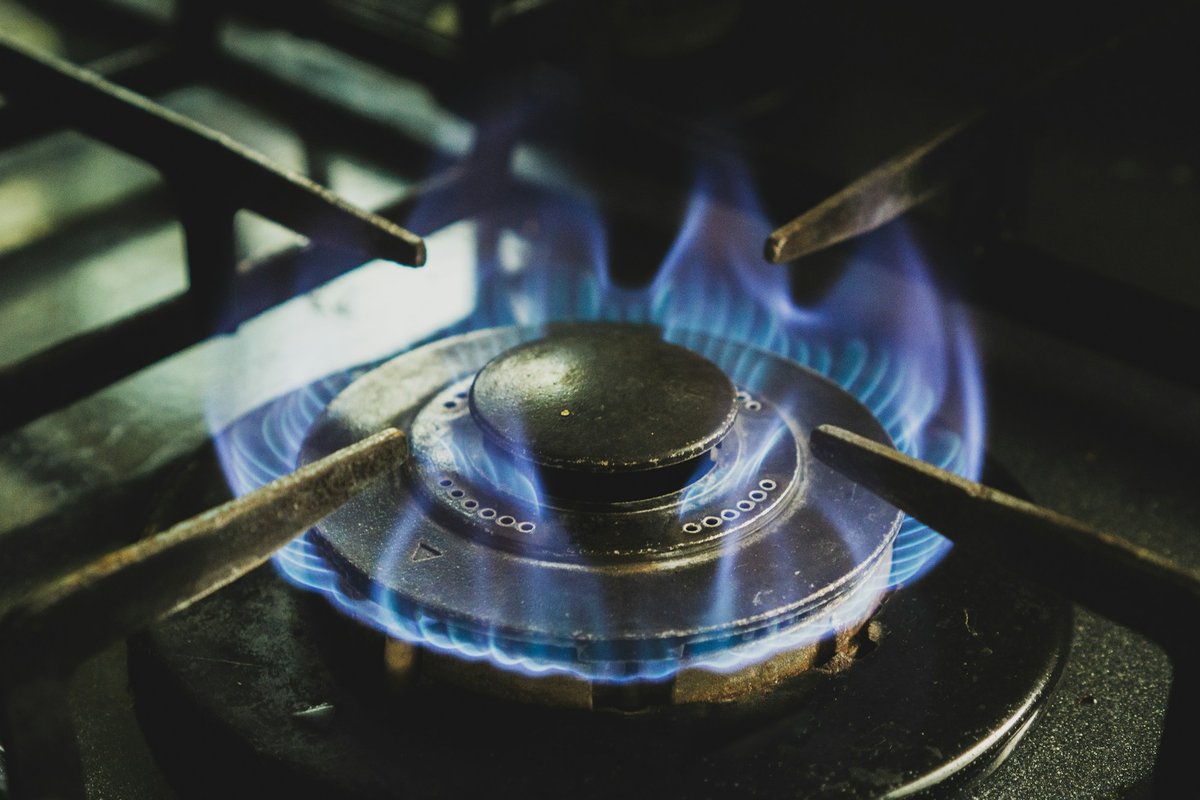
- The flame on the hob. It should be crisp and blue. Yellow or orange, lazy flames, or soot on pans are signs of poor combustion.
- Staining around the boiler, fire or flue — brown or black marks, or soot.
- The boiler display and pressure gauge. Fault codes, or pressure that keeps dropping and being topped up.
- Ventilation. Air bricks and vents blocked with furniture, boxes or tape, or painted over.
- The flue outside. Has a shed, extension, plant or new window gone up near the flue terminal since last year?
- The CO alarm. Is it there, in the right room, in date, and does it sound when tested?
- What the tenant tells you. Headaches that ease when they go out, condensation that's suddenly worse, a pilot light that keeps going out.
If anyone smells gas or suspects carbon monoxide, the advice is the same everywhere: get out, open windows if it's safe to, don't operate electrical switches, and call the gas emergency line (0800 111 999 in Great Britain, 0800 002 001 in Northern Ireland).
Doing it on site
The gas safety record itself has to come from a Gas Safe registered engineer. No app writes it for you, and nothing on this page replaces it.
What a landlord or agent can do is the walk between checks: the routine inspection that catches the blocked air brick, the stained flue and the dead CO alarm while there's still time. Speak while you walk, and the document the law or the client wants writes itself. Say what you see room by room — "Kitchen, hob flames blue, all four rings. Boiler cupboard: pressure at one bar, no staining. Living room air brick blocked by the sofa, photo." — and the visit report is written, dated and photographed before you leave.
Key Takeaway
The free rental property inspection template fills in on a phone, room by room, with the smoke and CO alarm inspection for the alarms. ReportWalk is the iPhone app for doing them by voice. First walks free.
Related
- EICR explained for landlords — the five-yearly electrical report
- Smoke and CO detector inspection checklist — the alarms the gas check doesn't cover
- Rental property inspection checklist — the routine visit, room by room
- Rental property inspection between tenants — the turnover walk, when the gas record goes to the new tenant
- Smoke and CO alarm inspection — free template, one entry per alarm
Frequently asked questions
What is a CP12? The everyday name for a landlord gas safety record: the document a Gas Safe registered engineer produces after the annual check of the gas appliances, fittings and flues a landlord provides. "CP12" was the name of the old CORGI form; the name stayed after Gas Safe took over the register in 2009.
How often does a landlord need a gas safety check? At least every 12 months, and within 12 months of installing a new appliance or flue. Since April 2018 the check can be done any time from 10 to 12 months after the last one without moving the deadline.
When must tenants get a copy of the gas safety record? Existing tenants within 28 days of the check, and new tenants before they move in. Landlords must keep each record for at least two years.
Who can carry out a landlord gas safety check? Only a Gas Safe registered engineer who is qualified for the type of appliance being checked. Their Gas Safe ID card lists the appliance types they can work on.
Does the landlord have to check a tenant's own gas cooker? No. Landlords aren't responsible for appliances the tenant owns, but they are responsible for the pipework supplying it and any flue that is part of the property.
Is a gas safety check the same as a boiler service? No. The safety check confirms an appliance is safe at that moment; a service is the maintenance the manufacturer recommends. Landlords have a duty to maintain gas appliances as well as to check them, and many engineers do both in one visit.
What if my tenant refuses access for the gas safety check? Take reasonable steps and record them: HSE inspectors look for at least three attempts, with written notice explaining the legal requirement. Never force entry.
Does the gas safety record still affect section 21 notices? In England, a missing gas safety record used to make a section 21 notice invalid. From 1 May 2026 private landlords in England can no longer serve section 21 notices, so the question has largely fallen away. The legal duty to carry out the check is unchanged.