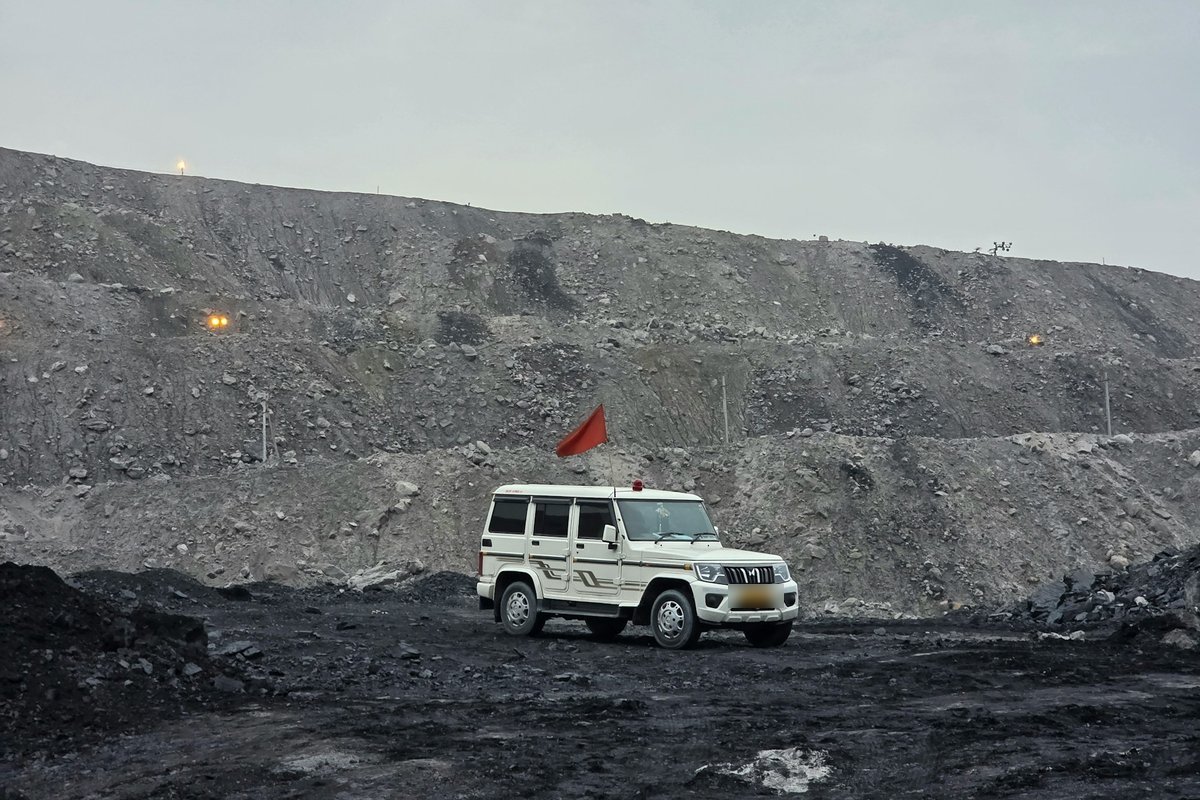
Light Vehicle Pre-Start Checklist for Mine Sites: The Walkaround, the Mine-Spec Kit, Then the Key
A light vehicle pre-start is the check a driver does on a ute or 4WD before taking it onto a mine site road: a walkaround of the vehicle, a look at the mine-spec equipment the site requires, the fluids, the cab and a short running check, written down before the shift starts. On a mine the LV shares the road with haul trucks whose drivers can't see a ute up close, so the pre-start is as much about being seen and heard — flag, beacon, radio, reverse alarm — as about tyres and brakes.
What follows is the check in the order you'd walk it. Your site's own light vehicle standard decides the exact list; this is the shape almost all of them share.
Why the LV gets its own check
A ute on a public road is an ordinary vehicle. On a mine site it's mobile plant in a mixed fleet, and every mining jurisdiction in Australia expects the operator to manage that risk. In practice, sites do it with three things:
- A mine-spec standard for the vehicle itself — what it must carry and be fitted with before it's allowed through the gate. Each operator sets its own, and they differ.
- A pre-start every shift, by the person driving it.
- A defect process that takes an unsafe vehicle off the road until it's fixed.
The pre-start is the bit that happens every day, so it's the bit that quietly degrades into a tick-sheet filled in from the driver's seat.
1. Before you walk to it
- The last pre-start. Open the book, or the app, and read yesterday's entry. Is there an open defect? Has it been signed off as fixed? If a defect is open and nobody has cleared it, the vehicle doesn't move until someone does.
- Tags on the vehicle. A danger or out-of-service tag means stop, whatever the paperwork says.
- You. Fit for work, inducted for this site, and authorised to drive this class of vehicle on it.
2. The walkaround, at ground level
Walk all the way round. A walkaround done from the window checks nothing below the door handles.
- Under the vehicle — fresh drips of oil, coolant, fuel or brake fluid on the ground
- Tyres — damage, cuts and bulges from rock, pressures that look right, and both spares if your site requires two
- Wheel nuts — all there; check the nut indicators if they're fitted
- Body and panels — new damage since the last shift, anything loose or hanging
- Bull bar, towbar, recovery points — secure, not cracked
- Windscreen and windows — no cracks in the driver's view; clean enough to see a haul road through
- Mirrors — present, intact, clean
- The tray or cargo area — load restrained, nothing loose to become a projectile, the cargo barrier in place
- Lights and lenses — cracked lenses, dust you'd have to wipe off to be seen
3. The mine-spec kit
This is the part a town pre-start doesn't have, and the part a site audit looks at first. Typical items — check your site standard for the exact list:
- Whip flag (buggy whip) — fitted, upright, the right height, flag on and visible, and lit if the site works at night
- Amber beacon — fitted and secure; you'll check it works in the running check
- Call-sign or fleet numbers — on the vehicle where the site wants them, and readable
- Two-way radio — UHF or VHF as the site specifies, programmed to the site channels
- IVMS (in-vehicle monitoring system) — fitted and working, if your site requires one
- Fire extinguisher — mounted, in date, gauge in the green, pin and tag intact
- First aid kit — present and stocked
- Reverse alarm — fitted (you'll hear it in a moment)
- Rollover protection — on sites that require a ROPS or rollbar, intact with no damage to the mounts
- Wheel chocks, spill kit, recovery gear, water — whatever your site's list includes
- Hygiene paperwork — some sites need a clean-down (weed and seed) record before a vehicle can enter
Important
A missing flag or a dead beacon is a no-go on most sites, not a note. A haul truck driver looks for the flag and the beacon, not the ute. If the site standard says it must be fitted, the vehicle stays parked until it is.
4. The engine bay — engine off, and cool
- Engine oil — between the marks
- Coolant — at the line in the expansion tank; never open a hot radiator cap
- Brake fluid — at the mark
- Power steering fluid, where it's hydraulic
- Washer bottle — full; dust means you'll use it
- Belts and hoses — no splits, cracks or rubbing
- Battery — terminals tight, hold-down secure, isolator working if fitted
- Air filter indicator, if fitted — dust kills engines on site
- Anything that doesn't belong — rags, nests, dust packed round the radiator
5. In the cab, before the key
- Seatbelts — every seat, latch and retract, no fraying
- Seat and mirrors — adjusted for this driver
- Loose items — nothing on the dash or floor that can roll under a pedal or fly in a hard stop
- Pre-start record and site paperwork — in the vehicle where the site expects them
- Cab clean — dust and rubbish on the floor are how a bottle ends up under a brake pedal
6. Running checks
Start it, and before you move:
- Warning lights — all out once the engine is running
- Gauges — fuel enough for the shift, temperature normal
- All exterior lights — head (both beams), tail, brake, indicators, hazards, reversing
- Beacon — on and turning or flashing
- Horn — works
- Reverse alarm — select reverse and listen for it
- Radio check — call on the site channel and get a reply, so you know you can be heard
- IVMS — logged in or showing ready, if your site uses driver ID
- Park brake — holds the vehicle against a gentle push in gear; check any park-brake alarm
- Service brakes and steering — a slow roll and a firm stop before the go-line, no pull, no noise
When it fails
Write the defect down where the next driver and the maintainer will both see it, and decide:
- Unsafe — brakes, steering, tyres, lights, seatbelts, or missing mine-spec kit: tag it out, tell your supervisor, and don't drive it
- Defective but safe — a cracked mirror housing, a stiff door: record it, report it, and drive it if your site's process allows
Then the defect needs an owner and a close-out: who's fixing it, and who signs it off as fixed. A defect with no close-out is just a note that ages.
What most LV pre-starts get wrong
They're done from the driver's seat. Gauges and warning lights get checked; the cut sidewall, the drip under the sump and the flag pole snapped at the base don't. Walk it.
"OK" on every line, every shift. A pre-start that never finds anything isn't proof of a good ute. The one that finds a weeping hose, a beacon with a dead bulb and a fire extinguisher two months out of date is the one somebody's actually doing.
The defect dies in the book. "LH rear tyre cut" written in a carbon-copy book in the glovebox doesn't reach maintenance, and the night-shift driver never reads it. A defect has to reach the next driver and whoever fixes it, the same shift.
No photo. A photo of the cut sidewall takes three seconds and ends the "was it like that when you got it?" conversation at the end of the swing.
Doing it with gloves on
The pre-start happens at 5:30am in a car park full of dust, gloves on, before the toolbox talk, with thirty other people doing the same thing. Nobody wants to thumb a form on a phone in that, which is why so many get ticked from memory in the cab.
Speak while you walk, and the document the law or the client wants writes itself. Walk round the ute and say what you see — "LV 42, flag's on and up, beacon fitted. Left rear tyre, cut in the sidewall about two centimetres, photo. Extinguisher in date. Radio check good on channel one." — and the pre-start is written, timed and photographed before you've climbed in. The cut tyre is in front of maintenance before the vehicle leaves the car park.
Key Takeaway
The free daily vehicle inspection report covers the vehicle walkaround, the engine bay and the defect sign-off, and fills in on a phone. There's no mine-spec section built in yet. In the ReportWalk app you can add your site's items — flag, beacon, radio check, IVMS — as you walk, and they stay with that pre-start. First walks free.
Related
- Daily vehicle inspection report — free template: walkaround, engine bay, defects and sign-off
- Mining safety inspection — the site walk, not the vehicle
- Tractor pre-start checklist — the same discipline for farm machinery
- Pre-trip inspection checklist — the walkaround for trucks on public roads
- Take 5 examples — the one-minute check before a specific task
Frequently asked questions
What is a light vehicle pre-start? A check the driver does on a light vehicle — usually a ute or 4WD — before using it on a mine site each shift: a walkaround, the site's mine-spec equipment, fluids, the cab and a running check, recorded before the vehicle moves.
What equipment does a mine site light vehicle need? It depends on the site's own standard. Common items are a whip flag, an amber beacon, a two-way radio on the site channels, a reverse alarm, a fire extinguisher, a first aid kit, call-sign markings, a cargo barrier and, on many sites, an in-vehicle monitoring system (IVMS), a second spare tyre or rollover protection.
How often should a light vehicle pre-start be done? At the start of every shift, and whenever the vehicle changes drivers. If the vehicle is damaged or something changes during the shift, check it again before carrying on.
What should you do if the pre-start finds a defect? Record it and decide. An unsafe defect — brakes, steering, tyres, lights, seatbelts, missing mine-spec kit — means tagging the vehicle out, telling your supervisor and not driving it. A defect that isn't safety-critical is recorded and reported, and the vehicle may be used if your site's process allows.
Why do mine site vehicles have whip flags and beacons? So haul truck and heavy equipment operators can see them. A light vehicle can sit in a large machine's blind spot, and the flag and beacon are often the only parts visible from the operator's cab.
Is a light vehicle pre-start the same as a service? No. A pre-start is a daily check by the driver for anything that has changed or failed. A service is scheduled maintenance by the workshop. A pre-start often finds the thing that brings the next service forward.