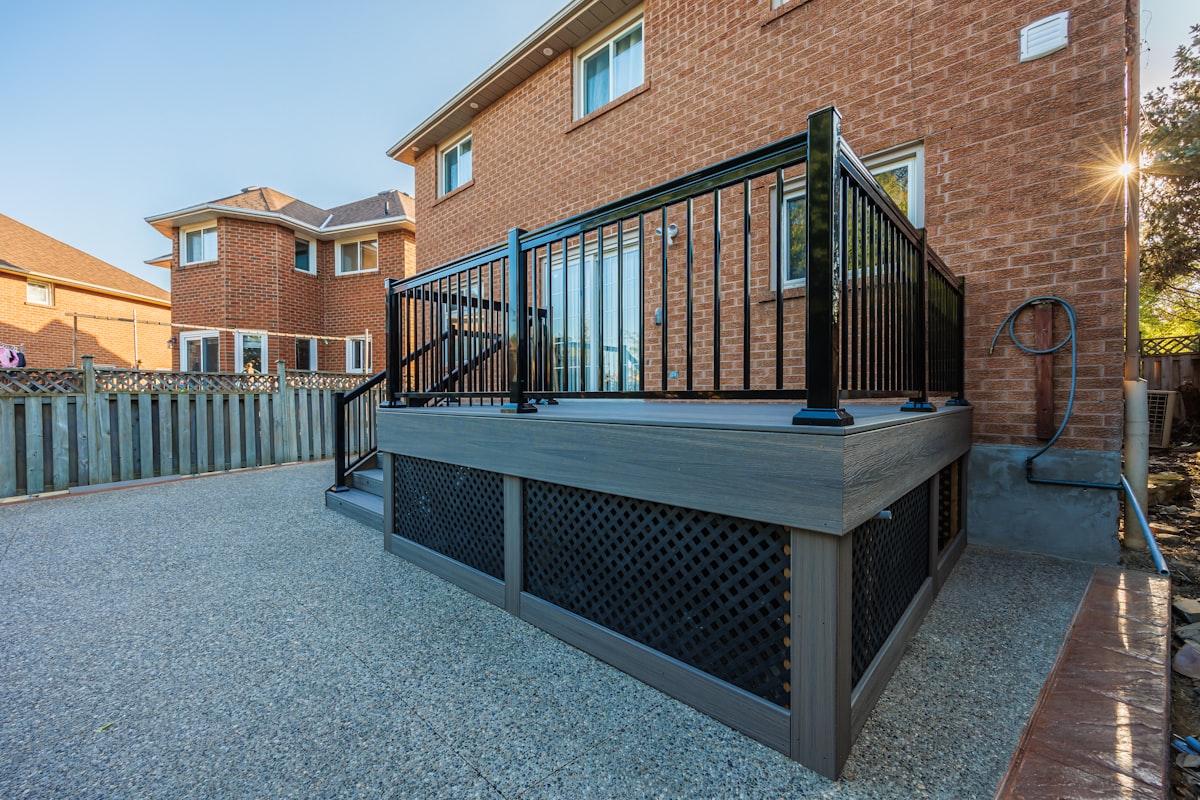
Deck & Porch Inspection: Complete Field Guide for Inspectors
A deck inspection checklist should be at the top of every home inspector's priorities — because decks are where people gather, and decks are where people get hurt. The Consumer Product Safety Commission estimates that deck collapses and failures cause over 30,000 injuries per year in the United States. Most of those failures are preventable. Most of them had visible warning signs that someone missed or ignored.
I've seen decks that look beautiful from the top — freshly stained, furniture arranged, string lights hung — and are held together by rusty nails and rotted ledger boards underneath. The surface tells you nothing. You have to get underneath, check the connections, probe the wood, and understand what's actually holding the thing up.
This deck inspection checklist covers every component you need to evaluate, why each one matters, and how to document your findings so they're clear and defensible.
The Ledger Board: Where Most Deck Failures Start
If there's one component that causes more catastrophic deck failures than any other, it's the ledger board. The ledger is the horizontal board that attaches the deck to the house, and it carries roughly half the deck's total load. When it fails, the deck doesn't sag — it collapses. People standing on the deck fall with it.
What to Check
- Attachment method: The ledger must be attached to the house framing (rim joist or band board) with lag screws or through-bolts. Nails are not acceptable. I see nail-only ledger attachments more often than I'd like — it's the single most dangerous deck defect you'll encounter.
- Fastener spacing: Lag screws or bolts should be spaced no more than 16 inches on center in a staggered pattern. Two rows, top and bottom of the ledger, alternating.
- Fastener condition: Look for corrosion, especially on older galvanized fasteners. ACQ-treated lumber (the green stuff used since 2004) is highly corrosive to standard galvanized hardware. Check that fasteners are rated for the lumber treatment.
- Ledger board condition: Probe the ledger with an awl or screwdriver. Soft wood means rot. Pay particular attention to the bottom edge and any areas near the house wall where water can pool.
Note
The International Residential Code (IRC) Section R507.9.1 requires ledger boards to be attached with 1/2-inch lag screws or bolts. Nails, deck screws, and structural screws that aren't specifically code-approved are not acceptable ledger fasteners. This is non-negotiable.
Flashing
Flashing behind and over the ledger board is critical for preventing water intrusion — both into the deck connection and into the house.
- Present or absent? If you can see the top of the ledger board meeting the house siding with no flashing, water is getting behind the ledger. This is the mechanism that causes most ledger rot.
- Type: Z-flashing or self-adhering membrane (like Vycor) that goes up behind the siding and over the top of the ledger. Caulk alone is not adequate flashing.
- Siding clearance: The house siding should not be in direct contact with the deck surface or ledger. A gap prevents capillary action from wicking moisture into the wall assembly.
Freestanding vs. Attached
Some decks are built freestanding on posts — not attached to the house at all. This eliminates the ledger board failure risk but introduces its own concerns (adequate post footings, bracing). Identify which type you're inspecting and adjust accordingly.
Structural Framing: Joists, Beams, and Posts
Joists
Joists are the horizontal framing members that support the deck boards. Here's your checklist:
- Size and spacing: Typical residential decks use 2x8 or 2x10 joists at 16 inches on center. Undersized joists (2x6 for spans over 8 feet) or excessive spacing (24 inches on center with standard decking) result in bouncy, potentially unsafe decks.
- Span: Check joist span against standard span tables. A 2x8 Southern Pine joist at 16" on center can span about 10.5 feet. Beyond that, it's overspanned.
- Condition: Probe representative joists with an awl. Focus on the ends (where they sit on beams or in joist hangers) and the bottom edges (where water collects). Rot typically starts where wood contacts other wood or metal.
- Crown: Joists should be installed crown-up (the natural curve facing upward). Crown-down joists sag and pool water.
- Blocking: Mid-span blocking between joists prevents twisting and provides lateral stability. Not always required by code but is best practice for spans over 8 feet.
Beams
Beams carry the loads from the joists to the posts. They're critical structural members.
- Size and span: Built-up beams (two or three 2x boards bolted together) are common. Check that the beam size is adequate for the span between posts. A double 2x10 beam can typically span about 8 feet between posts — less with heavier loads.
- Connection to posts: Beams should sit on top of posts with a post cap connector, or be bolted through the side of the post with through-bolts. Beams that are simply toenailed to the side of a post are a structural concern.
- Notched posts: Posts notched to accept a beam are weaker than unnotched posts with the beam on top. Deep notches (more than half the post width) significantly reduce the post's load-carrying capacity. Code generally limits notching.
Posts
- Size: 4x4 posts are limited to about 8 feet in height for deck applications. Taller decks need 6x6 posts. Many older decks were built with 4x4 posts at excessive heights — this is a structural concern.
- Base connection: Posts should be connected to footings with approved post bases that keep the wood off the concrete. Wood sitting directly on concrete wicks moisture and rots. A rusted or missing post base is a finding.
- Plumb: Sight down each post. Leaning posts indicate footing movement, rot at the base, or inadequate bracing. Even a slight lean is progressive — it will get worse.
Key Takeaway
Always get underneath the deck. I know it's not glamorous — spiderwebs, dirt, sometimes tight clearance. But 90% of deck defects are invisible from the top. If you can't access the underside, say so in your report and recommend further evaluation.
Footings and Foundations
The footings are what transfer the deck's load to the ground. Inadequate footings are responsible for post settlement, deck movement, and ultimately structural failure.
- Type: Poured concrete piers (extending below the frost line) are the standard. Precast concrete blocks sitting on grade are not adequate for attached or elevated decks — they can shift, settle, and heave with frost.
- Frost depth: Footings must extend below the local frost line. In northern states, that can be 36-48 inches deep. Shallow footings heave in winter and settle in spring, moving the deck structure each cycle.
- Size: Footing diameter should be at least 12 inches for typical residential decks, larger for heavy loads or poor soils. Most jurisdictions require engineered footing sizes for decks over certain heights.
- Exposure: If you can see the footing, check for cracking, spalling, or undermining from erosion.
Decking Surface
Wood Decking
- Rot: Walk the entire deck surface and probe any suspicious areas. Soft spots, discolored boards, and boards that flex more than their neighbors are all signs of decay.
- Fastener condition: Nails backing out create trip hazards and indicate the board is cycling (expanding and contracting with moisture). Deck screws are superior to nails but can corrode in ACQ-treated lumber if they're not rated for it.
- Board spacing: Gaps between deck boards should be 1/8 to 1/4 inch for drainage. Boards with no gap trap water and rot faster. Excessive gaps (over 3/8 inch) can catch heels and are a trip/fall concern.
- Structural integrity: Jump on it. Seriously. A deck that bounces noticeably under a single person's weight is telling you something about the framing below.
Composite Decking
- Surface condition: Composite decking can develop mold/mildew, surface flaking, and color fading. While not structural, these affect the material's longevity.
- Fastener compatibility: Composite manufacturers require specific fastener types and spacing. Hidden fastener systems should be intact.
- Span limitations: Composite boards are generally weaker than dimensional lumber and may require closer joist spacing (12 inches on center vs. 16 inches). Check for sagging between joists.
Railings and Guards
Railing failures are the second most common cause of deck-related injuries, after structural collapse. This is a safety-critical system.
Height
- Residential code: Guards are required when the deck surface is more than 30 inches above grade (24 inches in some jurisdictions). Minimum guard height is 36 inches for residential (42 inches for commercial).
- Measurement point: Measure from the deck surface to the top of the rail. Don't assume — measure. I've found railings that look right but are 32-33 inches. That's a code violation.
Baluster Spacing
- 4-inch rule: The spacing between balusters (the vertical pieces) must not allow a 4-inch sphere to pass through. This prevents children from getting their heads stuck or falling through. Check at multiple points — spacing often varies.
- Bottom gap: The gap between the bottom rail and the deck surface should also not exceed 4 inches. This is commonly overlooked.
Structural Integrity
- Push test: Lean against the railing with moderate force. It should not flex more than minimally. Wobbly railings indicate loose connections, deteriorated posts, or undersized components.
- Post connections: Railing posts should be bolted through the rim joist or attached with approved structural connectors. Posts that are only lag-screwed to the face of the rim joist without blocking are a concern — this is a common failure point.
- Top rail: Should be continuous and graspable. A flat 2x6 cap rail with no graspable profile is common but doesn't meet the intent of providing a handhold.
Note
Guard post connections must resist a 200-pound lateral load applied at the top of the post (per IRC R301.1). Many deck railings — particularly those with face-mounted posts — cannot meet this requirement. When in doubt, recommend evaluation by a qualified contractor.
Stairs
Deck stairs are subject to the same building code requirements as interior stairs, but they're exposed to weather and often built with less care.
- Rise and run consistency: All risers should be the same height (within 3/8 inch tolerance). Uneven risers are a trip hazard — and one of the most common findings on deck stairs.
- Riser height: Maximum 7-3/4 inches per code. Steep stairs are dangerous, especially when wet.
- Tread depth: Minimum 10 inches. Narrow treads don't provide a full footfall.
- Stringer condition: The angled boards that support the treads. Check for rot, cracks, and adequate attachment at top and bottom. Stringers should be connected to the deck framing with metal hangers — not just nailed.
- Handrail: Required on at least one side when there are four or more risers. Should be graspable (1.25" to 2" diameter for round profiles). Flat 2x4 rails are not graspable per code.
- Landing: A landing is required at the bottom of the stairs. The landing surface should be stable, level, and at least 36 inches deep.
Hardware and Connections
Joist Hangers
- Present where needed: Every joist-to-beam and joist-to-ledger connection should have an approved joist hanger. Missing hangers mean the joist is relying on toenails or end-nails alone — neither of which provides adequate uplift or lateral resistance.
- Properly nailed: Joist hangers have specific nail holes for specific nail sizes. Empty holes reduce the hanger's rated capacity. Using drywall screws or deck screws in joist hangers is a defect — they don't have the shear strength of structural nails.
- Correct size: The hanger must match the joist size. A 2x8 hanger on a 2x10 joist doesn't support the bottom of the joist.
- Corrosion: Galvanized hangers in contact with ACQ-treated lumber should be G185 galvanized or stainless steel. Standard G60 galvanized hangers corrode rapidly with modern pressure-treated lumber.
Lateral Bracing
Decks need lateral bracing to resist racking (sideways movement). This is especially critical for elevated decks.
- Diagonal bracing: X-bracing or knee bracing between posts and beams resists lateral loads from wind and occupant movement.
- Hold-down hardware: Connections designed to resist uplift forces at critical points.
- Ledger connection (again): The ledger attachment to the house is the primary lateral restraint for attached decks. This is another reason proper ledger bolting is so critical.
Porches: Additional Considerations
Porches share many inspection points with decks but have some unique concerns:
- Roof structure: Porch roofs add load to the columns and foundation. Check columns for plumb, rot at the base, and adequate connection to the beam above.
- Ceiling condition: Porch ceilings (often beadboard) can conceal water damage, insect activity, and structural issues. Look for staining, sagging, or peeling paint.
- Enclosed porches: Three-season porches often have inadequate foundations (sitting on shallow piers or blocks) and electrical work that doesn't meet code for habitable spaces.
- Screen and glass panels: Check frames for structural integrity. Screened porches should still have guards that meet code at the required height — screens are not guards.
Documentation Tips
Deck findings need to be especially clear because they often involve safety concerns that require prompt attention.
Photograph Everything
- Overview shots: Show the deck in context — height above grade, relationship to the house, overall size.
- Underside: Get beneath the deck and photograph the framing, connections, and ledger. This is where your value is.
- Specific defects: Close-up photos of rot, missing hardware, improper connections, and clearance issues.
- Measurements: Photograph your tape measure against railing heights, baluster spacing, and stair dimensions.
Use Clear Language
Instead of: "Deck railing is deficient."
Write: "The deck railing height measures 32 inches at the east side, which is below the 36-inch minimum required by the International Residential Code. The deck surface is approximately 6 feet above grade at this location. Recommend correction by a qualified contractor to meet current safety standards."
Severity Matters
Not all deck findings are equal. A missing baluster is a moderate concern. A nail-only ledger connection on a deck 10 feet above grade is an imminent safety hazard. Your report language should reflect the difference.
For complex deck inspections with dozens of findings, dictating observations in the field saves significant time. ReportWalk lets you speak your findings as you inspect — describe the rot, the missing hanger, the inadequate railing height — and the app structures it all into a professional report. When you're crouched under a deck with a flashlight in one hand, having your voice do the documenting instead of your thumbs is a game-changer.
Deck Inspection Quick Reference Checklist
| Component | What to Check | Common Defects |
|---|---|---|
| Ledger board | Bolts (not nails), flashing, rot | Nail-only attachment, missing flashing, rot |
| Joists | Size, spacing, span, condition | Undersized, rot at ends, missing hangers |
| Beams | Size, span, post connection | Toenailed to posts, undersized |
| Posts | Size, base connection, plumb | 4x4 at excessive height, no post base |
| Footings | Depth, size, type | Above frost line, precast blocks |
| Decking | Rot, fasteners, spacing | Soft spots, popped nails, no gaps |
| Railings | Height (36"), baluster spacing (4") | Too short, wide spacing, wobbly |
| Stairs | Rise/run consistency, stringers, handrail | Uneven risers, rotted stringers |
| Hardware | Joist hangers, nailing, corrosion | Missing hangers, wrong fasteners |
Wrapping Up
A thorough deck inspection takes 20-30 minutes for a typical residential deck — more for large or elevated structures. The key is getting underneath and checking every connection. The surface is cosmetic. The structure is what keeps people safe.
Every spring, decks across the country fill up with families grilling, kids playing, and friends gathering. Your inspection is what ensures those decks hold. Take it seriously. Document it thoroughly. And when something's wrong, say so clearly — because the alternative is someone getting hurt.
Related reading: Home inspection checklist | Foundation inspection | Roofing inspection checklist