Chimney Inspection: What Every Inspector Should Check & Document
A chimney inspection is one of the most overlooked — and most consequential — parts of a residential home inspection. Chimneys fail quietly. Mortar deteriorates behind a clean brick face. Flue liners crack where you can't see them. Flashing separates a millimeter at a time until the next heavy rain sends water straight into the framing.
I've inspected hundreds of chimneys over the years, and the pattern is always the same: homeowners assume if the fireplace "works," the chimney is fine. It's our job to look deeper. This guide covers everything you should be checking during a chimney inspection — from the crown down to the cleanout — and how to document it so your report holds up.
Why Chimney Inspections Matter
Chimney failures cause an estimated 25,000 house fires per year in the United States, according to the National Fire Protection Association (NFPA). Beyond fire risk, a compromised chimney can introduce carbon monoxide into living spaces, cause extensive water damage, and create structural problems that are expensive to repair.
For a general home inspection, you're performing what the Chimney Safety Institute of America (CSIA) calls a Level 1 inspection — a visual examination of readily accessible components. You're not going up inside the flue with a camera. But you'd be surprised how much you can catch with a flashlight, binoculars, and knowing where to look.
Note
A Level 1 chimney inspection covers all readily accessible portions. Level 2 adds video scanning of flue interiors (required during property transfers in some states). Level 3 involves removal of building components. Most home inspectors perform Level 1 only.
Exterior Chimney Inspection: Start from the Top
Chimney Cap
The chimney cap is the first line of defense against water, animals, and debris entering the flue. Here's what to check:
- Present or absent? You'd be amazed how many chimneys have no cap at all. If it's missing, that's an immediate recommendation — water, leaves, and critters have direct access to the flue.
- Material and condition: Galvanized steel caps rust. Stainless steel and copper last decades. Check for corrosion, bent mesh, or damaged mounting.
- Spark arrestor mesh: Should be present with openings no larger than 1/2 inch. Mesh prevents embers from escaping and animals from entering. Clogged mesh restricts draft — check for creosote or debris buildup.
- Proper fit: A cap that's loose or improperly sized can blow off in a windstorm. Check that it's securely fastened to the flue tile or crown.
Chimney Crown (Wash)
The crown is the concrete (or morite) slab that tops the chimney structure, sloping away from the flue to shed water. This is one of the most common failure points.
- Cracks: Hairline cracks are early-stage deterioration. Cracks wider than 1/8 inch allow significant water infiltration. Any crack that runs from the flue tile to the edge of the crown is a priority repair.
- Slope: The crown should slope away from the flue on all sides. Flat or reverse-slope crowns pool water and deteriorate faster.
- Overhang: A properly built crown extends at least 2 inches past the chimney masonry on all sides with a drip edge. Most older chimneys don't have this — the mortar just feathers out flush with the brick.
- Material: Portland cement-based crowns are standard. If someone used mortar mix (not the same thing) for the crown, it'll crumble within a few years.
Key Takeaway
Bring binoculars. You can assess the crown condition from the ground on most two-story homes. If you can see cracks, gaps, or missing sections from 30 feet away with binoculars, that tells you everything you need to know.
Masonry Condition
Walk around the chimney and evaluate the brick and mortar joints:
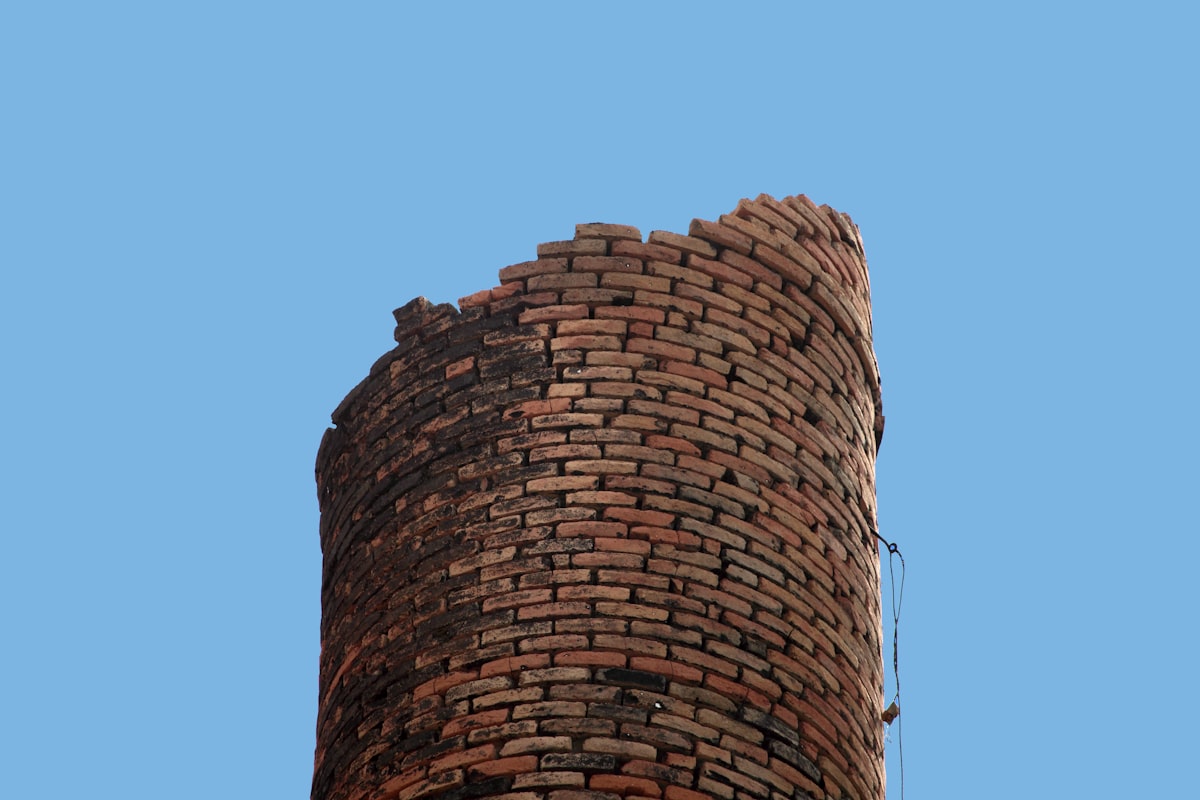
- Spalling brick: When the face of a brick flakes or pops off, moisture has been freezing and thawing inside the brick. This is progressive — it won't stop on its own.
- Deteriorated mortar joints: Mortar should be hard and flush with or slightly recessed from the brick face. Soft, crumbling, or missing mortar means repointing is needed. Poke it with an awl — if it crumbles easily, document it.
- Efflorescence: White crystalline deposits on brick mean water is migrating through the masonry. It's not harmful by itself, but it's a symptom of moisture infiltration.
- Leaning or separating chimney: A chimney pulling away from the house structure is a major structural concern. Check the gap between the chimney and the house siding — it should be consistent. Widening gaps at the top mean the chimney is leaning.
- Corbelling: The decorative stepped-out brickwork near the top of many chimneys is particularly vulnerable to deterioration. Check it closely.
Flashing
Flashing is where the chimney meets the roof, and it's one of the most common sources of water intrusion in any home.
- Step flashing vs. continuous: Step flashing (individual L-shaped pieces woven into each course of shingles) is correct. A single bent piece of aluminum laid against the chimney with caulk is wrong — but extremely common.
- Counter-flashing: Should be embedded in or attached to the mortar joints, overlapping the step flashing below. Check that it's still sealed into the mortar.
- Cricket/saddle: Chimneys wider than 30 inches on the upslope side of the roof should have a cricket — a small peaked structure that diverts water around the chimney. Missing crickets are a defect on wider chimneys. Water pools behind the chimney without one.
- Sealant condition: Check all sealant joints. Dried, cracked, or separated caulk means water is getting behind the flashing.
- Rust or corrosion: Galvanized flashing has a limited lifespan. If it's rusting through, it needs replacement.
Interior Chimney Inspection
Flue Liner
The flue liner is the inner channel that contains combustion gases and protects the chimney structure from heat and corrosion. This is a critical safety component.
- Type: Clay tile (most common in masonry chimneys), stainless steel (inserts and modern installations), or cast-in-place cement. Each has different inspection considerations.
- Visible damage: Using a flashlight, look up from the firebox and down from the top (remove the cap if accessible). You're looking for cracked, broken, or offset tiles. A cracked flue liner allows heat to reach combustible framing — this is a fire hazard.
- Missing liner: Some older chimneys (pre-1940s) were built without liners. Unlined chimneys are a safety concern and should be flagged for professional evaluation. The NFPA 211 standard requires all chimneys serving solid fuel appliances to have a liner.
- Proper sizing: The flue should be sized for the appliance it serves. An oversized flue for a small insert causes poor draft and excessive creosote buildup. A too-small flue restricts exhaust.
Creosote Buildup
Creosote is the black, tarry residue that accumulates inside the flue from burning wood. It's the primary fuel source in chimney fires.
- Stage 1: Flaky, soot-like deposits. Normal accumulation, easy to clean.
- Stage 2: Shiny, tar-like glaze. Harder to remove. Indicates the fireplace has been burning at lower temperatures or with unseasoned wood.
- Stage 3: Thick, hardened, dripping formations. This is a fire waiting to happen. Stage 3 creosote requires professional removal and may indicate the flue has already experienced a chimney fire.
Note
The CSIA recommends cleaning when creosote accumulation reaches 1/8 inch. During a general home inspection, you're not measuring creosote thickness — but you should note visible buildup and recommend professional cleaning if it looks significant.
Firebox Condition
The firebox is where the fire burns, and it takes the most direct abuse:
- Firebrick: Should be intact with tight mortar joints. Cracked, broken, or missing firebricks expose the chimney structure to direct flame heat. Individual bricks can be replaced, but widespread damage may require a full rebuild.
- Refractory panels: Prefabricated fireplaces use refractory panels instead of firebrick. These crack over time and are replaceable — but cracked panels should be documented.
- Mortar joints: Use a screwdriver or awl. If the mortar between firebricks crumbles when you press on it, the joints need repointing.
- Smoke chamber: The area above the damper that funnels into the flue. Look for exposed brick (should be parged smooth), deteriorated mortar, or missing parging.
Damper
- Operation: Open and close the damper. It should move freely without binding. A stuck damper is either corroded, warped from heat, or blocked by debris.
- Seal: When closed, the damper should seal reasonably well. A damper that doesn't close means conditioned air is leaving the house 24/7 — and rain and animals can enter.
- Type: Throat dampers (traditional, inside the firebox) vs. top-sealing dampers (mounted at the top of the flue with a cable control). Top-sealing dampers serve double duty as caps.
Clearances to Combustibles
This is where chimney inspections intersect with fire safety — and where many inspectors miss critical findings.
- 2-inch clearance rule: Combustible materials (framing, drywall, insulation) must maintain at least 2 inches of clearance from the exterior of a masonry chimney. Check in accessible attic spaces where the chimney passes through.
- Insulation contact: Insulation should not be in contact with the chimney. This is common in attics where someone added blown-in insulation without maintaining clearances.
- Framing contact: Look where the chimney passes through floors and the roof structure. Wood framing directly against chimney masonry is a fire hazard — and it's more common than you'd think in older homes.
- Firestop: There should be sheet metal firestopping where the chimney passes through each floor and the ceiling. Missing firestops allow fire to spread between floors through the chase.
Check the home inspection checklist for how chimney findings fit into the overall inspection flow.
Gas Appliance Flues
Not all chimneys serve fireplaces. Many vent gas furnaces, water heaters, or boilers. These have their own inspection requirements:
- Draft test: Hold a match or smoke pencil near the draft hood while the appliance is running. Smoke should be drawn into the flue, not spilling into the room. Backdrafting is a carbon monoxide hazard.
- Connector pipe: The vent connector from the appliance to the chimney should slope upward at least 1/4 inch per foot. Check for rust, holes, or disconnected sections.
- Single-wall vs. B-vent: Single-wall connectors require 6 inches of clearance to combustibles. B-vent (double-wall) requires 1 inch. Check that clearances are maintained.
- Shared flues: Two gas appliances can share a flue under specific conditions (the smaller appliance connects above the larger one, flue is properly sized). A gas appliance and a wood-burning fireplace should never share a flue.
For related HVAC venting concerns, see our HVAC inspection checklist.
Documentation Best Practices
Chimney findings are among the most disputed items in home inspection reports. Clear documentation protects both your client and your business.
What to Photograph
- Every defect from multiple angles. A photo of a cracked crown from the ground plus a zoomed shot showing crack width.
- Overall chimney condition. Wide shots showing the chimney in context with the roofline.
- Flashing details. Close-ups of separation, rust, or improper installation.
- Firebox interior. Creosote buildup, cracked firebrick, damper condition.
- Clearance issues. Attic shots showing framing or insulation contact.
Writing the Findings
Be specific. "Chimney needs repair" is useless. Try:
"The chimney crown has multiple cracks exceeding 1/4 inch in width, with one crack extending from the flue tile to the outer edge. Water infiltration through these cracks will accelerate deterioration of the masonry below. Recommend repair or replacement of the crown by a qualified mason."
Referrals
For anything beyond surface-level observations, refer to a CSIA-certified chimney sweep for a Level 2 inspection. This isn't passing the buck — it's appropriate scope management. You're a generalist. They're specialists with cameras that go inside the flue.
If you're documenting chimney findings in the field, consider how much faster it would be to speak your observations instead of typing them. Tools like ReportWalk let you dictate findings into structured report sections using your voice — so you can keep your eyes on the chimney instead of your phone screen. Describe what you see, and the report builds itself.
Common Chimney Red Flags: Quick Reference
| Finding | Severity | Recommendation |
|---|---|---|
| Missing chimney cap | Moderate | Install cap with spark arrestor |
| Crown cracks > 1/8" | Moderate-High | Repair or replace crown |
| Spalling brick (multiple) | Moderate-High | Repointing or rebuild |
| Chimney leaning/separating | High | Structural evaluation |
| Cracked flue liner (visible) | High | Level 2 inspection, possible relining |
| Stage 3 creosote | High | Professional cleaning before use |
| Missing flue liner | High | Do not use until lined |
| Combustible clearance violations | High | Correction required |
| Backdrafting gas flue | Critical | Immediate evaluation |
Wrapping Up
A thorough chimney inspection takes 15-20 minutes when you know what to look for. Most of the critical findings are visible from the exterior — you just need to know the anatomy of the system and understand what failure looks like at each component.
The biggest mistake I see newer inspectors make is treating the chimney as a pass/fail item. It's not. It's a system with a dozen components, each with its own failure modes and its own timeline. A chimney can have a perfect cap, solid masonry, and a cracked flue liner that makes it unsafe to use.
Check every component. Document what you find. Refer when it's beyond your scope. That's how you protect your clients — and your reputation.
Related reading: Roofing inspection checklist | Electrical inspection checklist | Foundation inspection