Gutter & Downspout Inspection: What Every Inspector Should Check & Document
A solid gutter inspection checklist separates thorough inspectors from the ones who glance up, note "gutters present," and move on. Gutters and downspouts are a home's first line of defense against water intrusion — and when they fail, the damage cascades into fascia rot, foundation erosion, basement flooding, and landscape washout. Every experienced inspector has seen a $200 gutter repair that became a $15,000 foundation problem because nobody documented the failure early enough.
This guide covers everything you should check and document during a gutter and downspout inspection, from material identification to discharge grading. Whether you're a new inspector building your routine or a veteran tightening your process, use this as your field reference.
Note
Gutter and downspout deficiencies appear in roughly 40% of home inspection reports. They're among the most common exterior findings — and among the most consequential when ignored. Always document them with photos and specific measurements.
Gutter Material Identification
Start your gutter inspection by identifying the material. Each type has different failure modes and expected lifespans.
Aluminum
The most common residential gutter material. Look for:
- Denting from ladders, hail, or debris impact
- Seam separation at joints (seamless gutters eliminate this but can still fail at corners and end caps)
- Paint peeling or oxidation — cosmetic but indicates age
- Expected lifespan: 20–30 years
Vinyl (PVC)
Budget-friendly but prone to UV degradation. Check for:
- Cracking and brittleness — especially in southern and western exposures
- Warping or sagging from heat exposure
- Color fading — indicates UV breakdown
- Joint separation — vinyl contracts and expands more than metal
- Expected lifespan: 10–20 years (less in high-UV climates)
Galvanized Steel
Durable but heavy. Common on older homes. Watch for:
- Rust spots and perforation — steel gutters rust from the inside out
- Heavy gauge = heavy load on fascia boards
- Solder joint failures at seams
- Expected lifespan: 15–25 years (shorter without maintenance)
Copper
Premium material, typically on high-end or historic homes. Note:
- Patina development — green oxidation is normal and protective, not a defect
- Solder joint integrity — copper gutters are joined by soldering, not caulk
- Galvanic corrosion if dissimilar metals are used for fasteners or connections
- Expected lifespan: 50+ years with proper maintenance
Key Takeaway
Always note the gutter material in your report. Different materials have different maintenance requirements and failure modes that inform your recommendations. A cracked vinyl gutter on a 15-year-old home is expected aging; a cracked aluminum gutter on a 5-year-old home suggests installation defect or impact damage.
Pitch, Slope & Alignment
Gutters need proper slope to function. Water should flow consistently toward downspouts with no pooling.
What to Check
- Slope direction: Gutters should slope toward the nearest downspout at approximately ¼ inch per 10 feet of run
- Standing water: After rain (or use your hose), check for pooling anywhere in the gutter run. Standing water means insufficient pitch or a low spot.
- Level sections: Long runs over 40 feet should have downspouts at both ends with the gutter pitched from the center toward each end
- Pull-away from fascia: The gutter should sit flush against the fascia board with no visible gaps. A gap indicates failed fasteners, rotted fascia, or both.
- Proper overhang alignment: The gutter's leading edge should sit below the roof plane so water sheets into the gutter, not behind it
How to Document
Note the approximate location of any pitch issues relative to the structure: "Northeast gutter run — standing water approximately 15 feet from corner, indicating insufficient slope." Photograph the standing water and, if possible, the gutter from end-on to show the sag.
Fastener and Hanger Condition
Gutters are only as good as what holds them up. Fastener failure is the number one cause of sagging and pull-away.
Common Fastener Types
- Hidden hangers (internal clip): Most common on modern seamless installations. Check for proper spacing (every 24–36 inches) and secure attachment.
- Spike and ferrule: Older system using long nails through a metal tube. These loosen over time and pull out of the fascia.
- Strap hangers: Mount to the roof deck under the first course of shingles. Check for lifting or displaced shingles.
- Fascia brackets: Screw-mounted brackets. Check for backing out or rotted fascia.
What to Look For
- Missing fasteners — visible gaps where hangers should be
- Pulled-out spikes — spike heads protruding from the front of the gutter
- Crushed ferrules — indicates overloaded gutter (ice, debris weight)
- Rotted fascia behind hangers — the fastener pulls through soft wood. This is a compounding problem: the gutter sags, which causes water to sit, which accelerates fascia rot.
- Spacing: Fasteners should be every 24–36 inches. Wider spacing leads to sagging, especially with heavy snow or ice loads.
Seams, Joints & End Caps
Water escapes at joints. Every seam is a potential leak point.
What to Check
- Inside and outside corner joints — the highest-stress points. Look for separation, sealant failure, and visible daylight.
- Straight-run seams (on sectional gutters) — check for overlap direction (upstream section should overlap on top), sealant condition, and pop rivets.
- End caps — should be sealed and secure. Leaking end caps cause concentrated water damage at specific fascia locations.
- Sealant condition — dried, cracked, or missing sealant is a repair item, not a cosmetic issue
- Visible drip lines on fascia below joints — water staining below a joint confirms active leaking even if the joint looks intact when dry
Documentation Tip
Photograph each leaking seam and note its location. "Leaking seam at northwest corner of front gutter run — visible water staining on fascia board below joint." This specificity helps contractors locate and price repairs without a second visit.
Downspout Connections & Condition
Downspouts carry concentrated water volumes. A single clogged or disconnected downspout can dump hundreds of gallons against the foundation during one storm.
What to Check
- Connection to gutter outlet — should be secure with no gaps. Check for pop rivet or screw attachment.
- Downspout sections — check each joint for separation, especially at elbows
- Strap attachment to wall — downspouts should be secured every 6–8 feet with straps or brackets
- Clogs — tap the downspout side to check for blockages. A solid "thunk" instead of a hollow sound suggests debris buildup.
- Crushed or dented sections — restricts flow, often from ladder placement or impact
- Size adequacy — standard 2×3 inch downspouts handle most residential roof areas, but larger roof sections or complex valleys may need 3×4 inch downspouts
Downspout Extensions & Discharge
This is where most gutter systems fail their primary job. Water that leaves the downspout must be directed away from the foundation — period.
The 6-Foot Rule
Downspout discharge should direct water at least 6 feet from the foundation wall. This is the minimum distance needed to prevent water from flowing back toward the foundation and causing hydrostatic pressure, basement seepage, or foundation erosion.
What to Check
- Extension presence — is there any extension at all? Missing extensions are one of the most common findings in home inspection.
- Extension length — measure it. Anything under 4 feet should be called out. Six feet is the target.
- Extension type:
- Rigid extensions (best)
- Flexible corrugated extensions (acceptable but check for crush damage and UV degradation)
- Splash blocks (better than nothing, but provide minimal distance from foundation)
- Discharge direction — extensions should point away from the foundation AND downhill. An extension that points toward a neighbor's property, a walkway, or back toward the house defeats its purpose.
- Underground drains — some homes connect downspouts to underground drain lines. Check for:
- Proper connection at the downspout
- Visible daylight outlets at the discharge point
- Evidence of backup (water surfacing around the downspout connection during rain)
- Pop-up emitters that may be stuck closed or buried
Key Takeaway
Underground drains are out of scope for a visual home inspection — you can't see inside them. But note their presence, check visible connections, and recommend a drain specialist if you see evidence of backup or failure. Many underground systems clog with roots, soil, or debris within 10–15 years.
Grading at Discharge Points
Even with proper extensions, the ground at discharge points must slope away from the foundation:
- Positive grade — ground should slope away at minimum 1 inch per foot for the first 6 feet
- Erosion channels — indicate concentrated water flow that's undermining landscaping or grading
- Pooling evidence — bare soil, moss growth, or standing water at discharge points
- Foundation staining — mineral deposits or water marks on the foundation wall near discharge points
Gutter Guards and Screens
Many homes have gutter protection systems. Inspect them — they're not always the maintenance-free solution homeowners believe.
What to Check
- Type identification: Mesh screens, foam inserts, reverse-curve (helmet-style), micro-mesh, or brush inserts
- Condition: UV degradation, corrosion, displacement by wind or animals
- Effectiveness: Are the gutters behind the guards actually clean? Lift a section if accessible. Fine debris (pine needles, shingle grit) often passes through or accumulates on top.
- Water overshoot: Helmet-style guards can cause water to overshoot the gutter during heavy rain. Look for splash evidence on the ground directly below the gutter edge.
- Impact on inspection: Gutter guards that prevent visual inspection of the gutter interior should be noted. "Gutter guards prevent visual inspection of gutter interior; recommend periodic professional cleaning to verify proper drainage."
Ice Dam Evidence
Even in moderate climates, ice dams can form during unusual cold events. In northern states, ice dam inspection is critical.
What to Look For
- Water staining on soffit or fascia — indicates water backed up behind ice dams and entered the roof system
- Bent or deformed gutters — ice loading can crush or pull gutters off the fascia
- Missing or displaced shingles at the eave edge
- Ice and water shield visible — its presence suggests the builder anticipated ice dam risk
- Heat cable installations — their presence confirms a history of ice dam problems
Fascia Board Condition Behind Gutters
The fascia board is hidden behind the gutter, making it one of the most commonly missed deficiencies. You can't always see the full fascia, but you can check what's visible and look for indicators.
What to Check
- Visible rot at gutter edges — where the gutter meets the fascia, look for soft, discolored, or peeling wood
- Paint peeling behind or around the gutter — moisture is getting behind the gutter
- Gutter pulling away — often caused by rotted fascia that can't hold fasteners
- Fungal growth — any visible mold or mildew on the fascia surface
- Insect damage — carpenter ants love moisture-damaged fascia
Document what you can see and note limitations: "Fascia board not fully visible behind gutters; visible portions at gutter ends show [condition]. Recommend further evaluation if gutter replacement is planned."
Overflow Staining on Siding
Look at the siding directly below each gutter run. Overflow evidence tells the story of how the system performs during actual rain events — something you may not observe during a dry-day inspection.
What to Look For
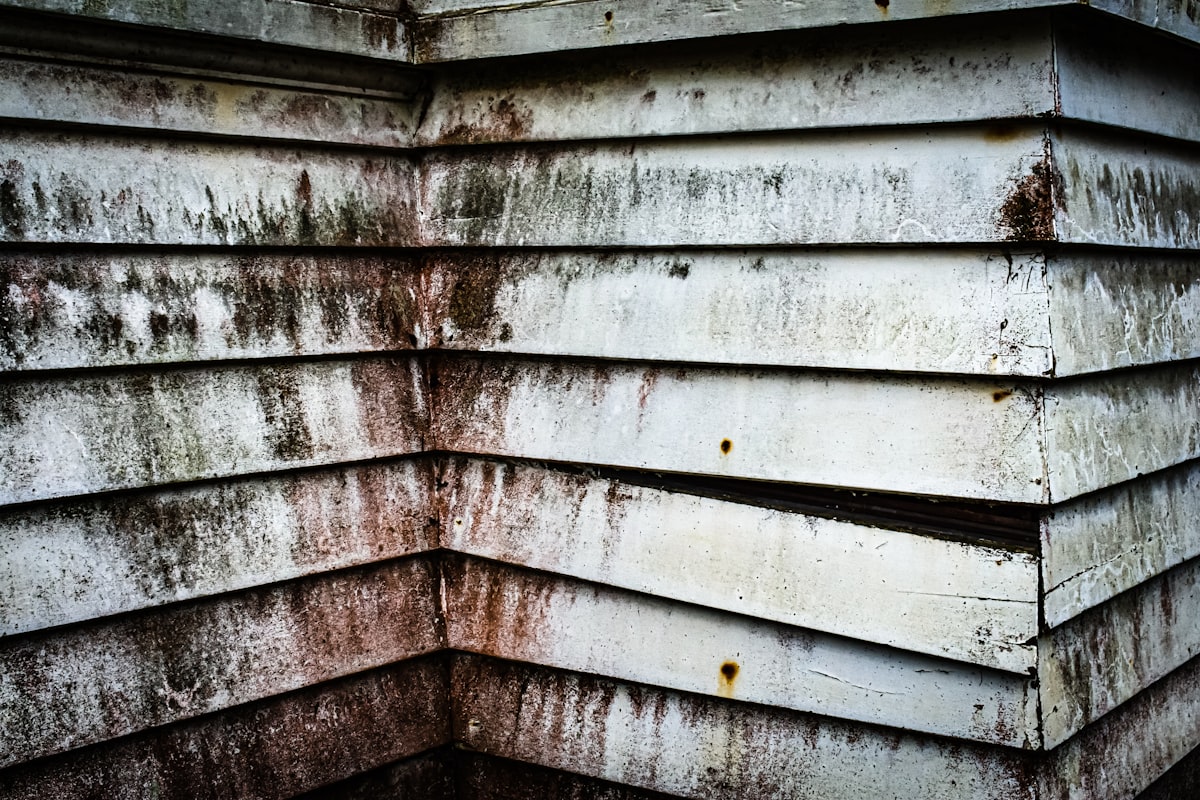
- Vertical water staining below gutter sections — indicates overflow from clogged or undersized gutters
- Algae or moss growth on siding in specific lines below gutters
- Paint peeling or bubbling on siding below gutter overflows
- Efflorescence on masonry below gutter lines
- Splash-back patterns on lower siding from missing or inadequate extensions
These stain patterns are your evidence. Photograph them — they prove a drainage problem exists even if the gutters look fine the day you inspect.
Documentation Best Practices
Gutter findings are some of the most frequently disputed items in post-inspection callbacks. Clear documentation protects you and serves your client.
For Every Gutter Deficiency, Document:
- Location — which elevation, which run (e.g., "south elevation, east gutter run")
- Material — what the gutter is made of
- Condition — specific deficiency observed
- Evidence — photograph the deficiency AND any resulting damage (staining, erosion, fascia rot)
- Recommendation — repair, replace, or specialist referral
Photo Tips
- Shoot gutter profile from ground level showing sag or pull-away
- Photograph discharge points showing extension length (or absence)
- Capture staining patterns on siding and fascia
- Get close-ups of leaking seams and failed fasteners
- Include a wide shot showing the overall gutter system for context
Voice-first reporting tools like ReportWalk make gutter documentation faster and more consistent. You can speak your findings while keeping both hands on the ladder and your eyes on the gutters — no fumbling with a phone keyboard. The AI converts your voice notes into structured report language, and you can tag photos to specific findings. It's available on iOS and built for exactly this kind of fieldwork.
For related exterior inspection guidance, check out our exterior inspection checklist, roofing inspection checklist, and grading and drainage inspection guide.
Gutters aren't glamorous, but they're one of the most impactful systems you'll inspect. A thorough gutter inspection catches problems before they become structural issues — and a well-documented report proves you did your job when questions come up later. Check every run, document every finding, and never skip the discharge points.