Mold Inspection: What Every Inspector Should Check & Document
A mold inspection isn't about lab testing or air sampling — at least not for most home inspectors. It's about recognizing the conditions that allow mold to grow, identifying visual indicators when they're present, and documenting everything clearly enough that the next professional in the chain (whether that's a remediation company, an indoor air quality specialist, or the buyer's attorney) can act on your findings.
Mold grows where moisture lives. That's the fundamental equation. Find the moisture, and you've found the mold risk. Miss the moisture, and you'll miss the mold — or worse, you'll walk right past it.
Here's what to check, where to look, and how to document it so your reports hold up.
Understanding Your Scope as a Home Inspector
Before we get into the specifics, let's be clear about scope. In most states, a general home inspector is not a mold inspector. You're not taking samples, you're not identifying species, and you're not making health claims. What you are doing is:
- Identifying visible suspected microbial growth (the industry-preferred term)
- Documenting moisture conditions that promote mold growth
- Noting musty odors and their locations
- Recommending further evaluation by a qualified specialist when warranted
Note
The EPA estimates that indoor mold affects roughly 47% of U.S. homes. You will encounter it. The question isn't whether — it's how well you document it.
Some states require a separate mold assessment license. Texas, Florida, New York, and Louisiana all have specific licensing requirements. Know your state's rules before you expand beyond visual observation and moisture readings.
Visual Indicators: What Mold Actually Looks Like in the Field
Mold doesn't always look like the dramatic black patches you see in remediation company ads. In the field, it shows up in subtler ways.
Surface Discoloration
- Black or dark green patches on drywall, ceiling tiles, or wood framing — the classic presentation, often Stachybotrys or Aspergillus
- White or gray fuzzy growth on floor joists, subflooring, or stored items in basements — commonly Penicillium or Cladosporium
- Pink or orange film in bathrooms, particularly on grout and caulk — often a bacterial biofilm (Serratia marcescens), not technically mold, but worth documenting
- Yellow or brown water stains with texture — may indicate past or current microbial growth; probe further
Where Most Inspectors Miss It
The obvious locations — bathroom ceilings, basement walls — get checked. The places mold hides are the ones that separate a thorough inspection from a surface-level walkthrough:
- Behind toilet tanks: Pull the tank away from the wall slightly. Condensation on cold porcelain creates a perfect microclimate.
- Under kitchen sinks: Not just the base of the cabinet — check the underside of the countertop and the back wall behind the pipes.
- HVAC closets and air handler drip pans: Condensation from air conditioning creates chronic moisture. Check the pan, the drain line, and the insulation around the unit.
- Attic sheathing: Especially in homes with bathroom exhaust fans that vent into the attic instead of through the roof. This is one of the most common mold sources in residential construction.
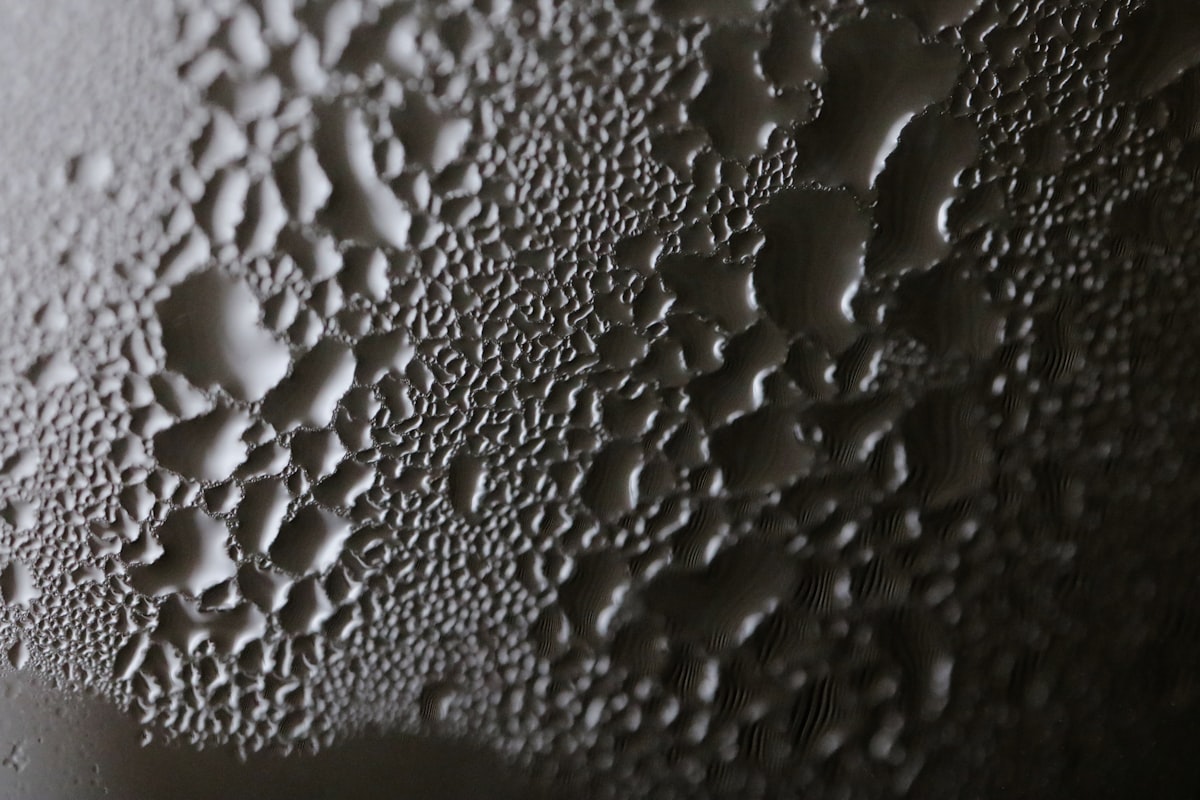
- Window sills and frames: Condensation on single-pane or poorly insulated windows creates a daily moisture cycle.
- Crawl space floor joists and subflooring: If the crawl space lacks a vapor barrier, ground moisture migrates up and colonizes the wood.
The Smell Test
Musty, earthy odors in specific areas are significant findings. Your nose picks up microbial volatile organic compounds (MVOCs) before your eyes see anything. Document the location and intensity:
- "Musty odor detected in northeast corner of basement, strongest near foundation wall"
- "Earthy smell noted upon opening HVAC closet; no visible growth observed"
Don't dismiss what you smell because you can't see it. Some of the worst mold problems are behind walls, above ceiling tiles, or under flooring.
Moisture Mapping: Finding Water Before It Becomes Mold
Every mold inspection is really a moisture investigation. The mold you see grew because of water you need to find.
Essential Moisture Tools
At minimum, you need:
- Pin-type moisture meter: Measures moisture content in wood and drywall by electrical resistance. Readings above 19% in wood indicate elevated moisture; above 28% means the material is at or above fiber saturation and actively supporting mold growth.
- Pinless (capacitance) moisture meter: Scans larger areas without penetrating the surface. Great for mapping moisture behind walls or under flooring without leaving marks.
- Infrared (thermal) camera: Shows temperature differentials that indicate moisture. Wet areas appear cooler than surrounding dry areas (evaporative cooling effect). Not definitive alone but excellent for directing where to probe further.
Systematic Moisture Mapping Protocol
Don't spot-check. Map systematically:
Basement/Crawl Space:
- Scan all foundation walls, bottom to top, every 3-4 feet along the perimeter
- Check floor-to-wall junctions (the most common entry point for groundwater)
- Probe any staining or efflorescence (white mineral deposits = water has been here)
- Document relative humidity — above 60% RH is a mold-friendly environment
Bathrooms:
- Floor around toilet base (wax seal failures are chronic moisture sources)
- Walls behind tub/shower surrounds — probe the drywall at the bottom edge
- Ceiling below any upstairs bathrooms
- Exhaust fan housing and ductwork
Kitchen:
- Under and behind the dishwasher
- Around the refrigerator (ice maker supply lines)
- Under the sink — both water supply and drain connections
Exterior Sources:
- Grade and drainage around foundation (negative grading = water flowing toward the house)
- Gutter downspout discharge points
- Window wells
- Hose bib locations (interior wall behind exterior faucets)
Key Takeaway
Take baseline moisture readings in areas you know are dry. Every meter reads differently, and every building material has a different "normal." Knowing what dry looks like on your meter helps you recognize what wet looks like.
Common Mold Scenarios and What's Causing Them
Scenario 1: Mold on Attic Sheathing
What you see: Black discoloration on the underside of roof sheathing, often concentrated near bathroom or kitchen areas.
What's causing it: Bathroom exhaust fan venting into the attic instead of through the roof. Hot, humid air hits cold sheathing and condenses. Every shower sends moisture directly into the attic space.
What to document: Location and extent of discoloration, exhaust fan termination point, presence/absence of proper roof venting, any daylight visible through the sheathing (indicating deterioration).
Scenario 2: Mold at the Base of Exterior Walls
What you see: Discoloration or peeling paint at the bottom 12-18 inches of exterior walls, often in corners or behind furniture.
What's causing it: Rising damp from poor drainage, missing or damaged vapor barrier, or foundation cracks allowing groundwater entry. Also check for missing or damaged flashing at the base of exterior cladding.
What to document: Height of affected area, moisture meter readings at multiple heights, exterior grade condition, downspout discharge locations relative to the affected wall.
Scenario 3: Mold Around Windows
What you see: Black spots on the window frame, sill, or surrounding drywall. Sometimes the growth is under the paint, visible as bubbling or peeling.
What's causing it: Condensation on poorly insulated windows. Single-pane windows in cold climates are notorious for this. Also check for failed window seals (fogging between panes indicates seal failure, which can lead to frame deterioration and mold).
What to document: Window type and condition, presence of condensation, moisture readings on sill and surrounding wall, evidence of failed seals.
Documentation Best Practices
Mold findings generate more disputes, callbacks, and legal issues than almost any other inspection topic. Your documentation needs to be bulletproof.
What Every Mold Finding Should Include
- Location: Specific room, wall (compass direction), height from floor, distance from landmarks (windows, corners, fixtures)
- Size: Approximate dimensions of affected area — "approximately 2 feet by 3 feet" or "scattered spots covering roughly 4 square feet"
- Description: Color, texture, pattern — "dark gray to black discoloration, slightly fuzzy texture, concentrated along the wall-ceiling junction"
- Moisture data: Pin meter readings (with material type noted), thermal imaging if used, relative humidity
- Probable moisture source: What's feeding this? Identify the water source if possible
- Photos: Wide shot showing location context, close-up of the growth, moisture meter display if readings are significantly elevated
Language That Protects You
Use these phrases:
- "Suspected microbial growth observed" (not "mold found")
- "Conditions conducive to microbial growth" (when you find moisture without visible growth)
- "Further evaluation by a qualified mold assessment professional is recommended"
- "Inspector did not perform mold testing or species identification"
Avoid these:
- "Toxic mold" — you can't determine toxicity without lab testing
- "Black mold" — not all black-colored mold is Stachybotrys, and not all Stachybotrys is black
- "Mold infestation" or "contamination" — inflammatory language that implies a conclusion beyond your scope
- Health-related claims of any kind
Internal Links to Deepen Your Reports
If you're documenting mold in specific areas, your report benefits from thorough documentation of related systems. A complete home inspection checklist helps ensure you don't miss the moisture sources that feed mold growth. And if the mold is in the crawl space, a proper crawl space inspection protocol covers the vapor barriers, ventilation, and drainage issues that are almost always the root cause.
When to Recommend Further Evaluation
Not every dark spot needs a specialist. But some situations always warrant a referral:
- Large affected areas: Anything over 10 square feet (the EPA's threshold for professional remediation)
- Hidden mold: When you smell it but can't see it, or when moisture readings suggest growth behind walls
- HVAC contamination: Growth in ductwork or on HVAC components means spores are being distributed throughout the house
- Occupant health complaints: If the client mentions respiratory issues, allergies, or symptoms that worsen at home — document their statement and recommend evaluation
- Post-remediation verification: If previous mold work was done, recommend clearance testing to verify it was effective
Building Your Mold Inspection Skills
Mold inspection is a skill that improves with every crawl space you enter and every attic you scan. The inspectors who do it well share a few habits:
- They always carry a moisture meter — even on routine inspections where mold isn't the focus
- They follow their nose — if something smells off, they investigate rather than dismiss it
- They document conditions, not just findings — "no visible growth observed; however, relative humidity measured at 72% in crawl space, conducive to microbial growth"
- They photograph everything — including areas where they found no issues (proves they looked)
The biggest time sink in mold documentation isn't the inspection itself — it's writing it all up afterward. Describing locations, noting measurements, contextualizing findings. That's where most inspectors lose an hour or more per report.
Some inspectors have started using voice-based documentation tools like ReportWalk to dictate findings in real time — describing what they see while they're looking at it, with the app structuring the notes automatically. When you're in a crawl space with a flashlight in one hand and a moisture meter in the other, typing on a phone isn't realistic. Speaking is.
Whatever tool you use, the key is capturing the detail while you're in the moment. Mold inspection findings reconstructed from memory back at the truck are never as accurate or as defensible as notes recorded on-site.
Key Takeaways
Mold inspection for home inspectors comes down to three things: find the moisture, document what you see, and know when to refer out. You don't need to be a microbiologist. You need to be systematic, thorough, and precise in your documentation.
The homes that have mold problems almost always have moisture problems first. Fix the water, and the mold stops growing. Miss the water, and the mold comes back — no matter how much bleach someone throws at it.
Stay within your scope, use the right language, and let your documentation speak for itself.