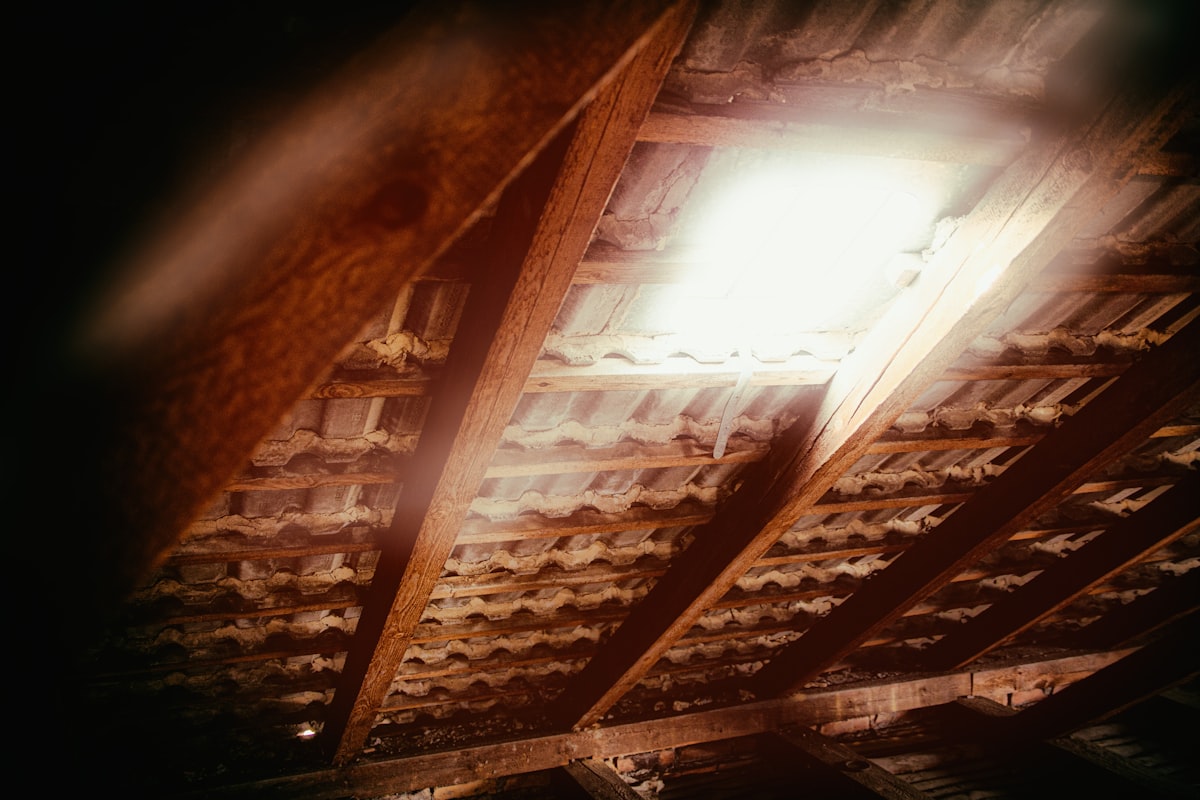
Insulation Inspection: What to Check & How to Document Deficiencies
Insulation is one of those inspection items that seems straightforward until you actually try to evaluate it properly. A thorough insulation inspection checklist goes beyond "insulation present" — you need to assess type, condition, coverage, depth, and whether it's actually doing its job. Poor insulation costs homeowners hundreds of dollars per year in wasted energy, creates comfort problems, and can contribute to moisture damage, ice dams, and even mold growth.
As inspectors, we're not energy auditors. But we are expected to evaluate visible insulation, identify obvious deficiencies, and communicate clearly when something isn't right. This guide covers what to check in every area of the home, how to measure and document what you find, and the common deficiencies that catch inexperienced inspectors off guard.
Why Insulation Matters More Than Most Inspectors Think
Before we get into the checklist, let's talk about why insulation deserves more than a quick glance.
The Department of Energy estimates that heating and cooling account for 50-70% of the energy used in the average American home. Insulation is the primary barrier between conditioned air and the outside environment. When it's inadequate, missing, or damaged, everything else works harder — the HVAC system runs longer, the homeowner pays more, and the house ages faster.
From a practical standpoint, insulation deficiencies are also easy to identify, straightforward to document, and directly actionable. Unlike some inspection findings that require interpretation, "you need more insulation in the attic" is something every client understands.
Note
The International Energy Conservation Code (IECC) sets minimum insulation requirements by climate zone. Most of the continental United States falls in zones 3 through 6, with minimum attic insulation ranging from R-30 to R-60 depending on location. Know your local zone requirements — they're the benchmark for your evaluation.
Attic Insulation: The Big One
The attic is where you'll find the most insulation — and the most problems. Heat rises, and an under-insulated attic is the single biggest source of energy loss in most homes.
What to Check
Type identification — Identify what's installed:
- Fiberglass batts — Pink, yellow, or white blankets between joists. The most common type in existing homes. Easy to identify, easy to measure depth.
- Blown-in fiberglass — Loose, fluffy material. Often yellow or white. Lighter and fluffier than cellulose.
- Blown-in cellulose — Gray or brown, denser than fiberglass, often made from recycled paper products. Settles over time, so original depth may be greater than what you measure now.
- Spray foam — Open-cell (soft, spongy) or closed-cell (rigid, dense). Usually applied to roof deck underside or between framing members.
- Mineral wool (rock wool) — Denser than fiberglass, gray-brown, fire resistant. Less common but increasingly popular.
- Vermiculite — Granular, pebble-like. If you see vermiculite insulation, note it carefully — some vermiculite (particularly the Zonolite brand from the Libby, Montana mine) may contain asbestos. See our asbestos inspection guide for handling protocols.
Depth measurement — Bring a ruler or insulation depth gauge:
- Measure in at least 3-4 locations across the attic, including center areas and perimeter/eave areas
- Record actual depth in inches
- Convert to approximate R-value using standard factors:
- Fiberglass batts: ~R-3.2 per inch
- Blown fiberglass: ~R-2.5 per inch
- Blown cellulose: ~R-3.5 per inch
- Spray foam (open-cell): ~R-3.7 per inch
- Spray foam (closed-cell): ~R-6.5 per inch
Coverage and distribution — Depth alone doesn't tell the whole story:
- Is the insulation evenly distributed, or are there thin spots and bare areas?
- Are the eave areas insulated? (They often aren't — or the insulation has been pushed back, creating bare spots right where thermal bridging is worst.)
- Is insulation stuffed against the roof deck at the eaves, blocking soffit ventilation? This is a common defect — insulation baffles should be installed to maintain airflow.
- Are there gaps around penetrations — plumbing vents, electrical wires, recessed light housings, chimneys?
Key Takeaway
One of the most common attic insulation deficiencies is insufficient coverage near the eaves. Blown-in insulation tends to be thinnest at the perimeter, exactly where thermal bridging through the top plate creates the most heat loss. Always check eave areas specifically and note reduced depth in your report.
Common Attic Insulation Deficiencies
- Insufficient depth/R-value — The most common finding. Compare measured R-value to IECC requirements for your climate zone.
- Gaps and voids — Bare spots between or around joists, especially at penetrations and transitions.
- Compressed insulation — Storage items placed on top of insulation compress it and reduce its effectiveness. Fiberglass loses R-value rapidly when compressed.
- Displaced insulation — Wind-washed insulation at eaves, insulation displaced by HVAC workers or electricians and not replaced.
- Missing vapor barrier — In cold climates (zones 5+), a vapor retarder on the warm side of the insulation helps prevent moisture condensation. Check if it's present and properly installed.
- Insulation over recessed lights — Unless the fixtures are IC-rated (Insulation Contact), insulation must be kept 3 inches away from the fixture. Insulation covering non-IC fixtures is a fire hazard.
- Blocked soffit vents — Insulation pushed against the roof deck at eaves prevents proper attic ventilation, contributing to ice dams and moisture problems.
Wall Insulation: Harder to Evaluate, Still Important
Wall insulation is trickier because you can't see it in most finished homes. But there are ways to assess it without opening walls.
What to Check
Obvious indicators:
- In unfinished areas (basements, garages, utility rooms), you can often see whether wall cavities are insulated where the wall framing is visible.
- Around electrical outlets on exterior walls, remove the cover plate and look into the cavity with a flashlight. You can often see or feel insulation (make sure the circuit is off first). This isn't a comprehensive test, but it's a data point.
- Thermal irregularities — on cold days, exterior walls without insulation feel noticeably cold to the touch. Interior surface temperature variations can indicate missing insulation.
Thermal imaging (if available):
If you carry an infrared camera or thermal imaging attachment (and you should consider it), wall insulation assessment becomes much more reliable:
- Scan exterior walls on days with at least a 15-20°F temperature difference between inside and outside
- Missing insulation shows as dramatically different temperature zones — cold spots in winter, hot spots in summer
- Thermal bridging at studs is normal; large cold/hot patches between studs indicate missing or settled insulation
Construction era as context:
- Homes built before the 1970s often have little or no wall insulation
- Homes built in the 1970s-80s typically have R-11 to R-13 fiberglass batts
- Homes built after 2000 generally meet code requirements (R-13 to R-21 depending on climate zone)
Knowing the home's age helps you calibrate expectations and frame your findings appropriately.
Common Wall Insulation Deficiencies
- No insulation — Common in pre-1960s homes and sometimes in homes up through the 1970s
- Settled insulation — Blown-in wall insulation (especially cellulose) can settle over decades, leaving the top portion of wall cavities uninsulated
- Missing insulation in specific areas — Knee walls, cantilevered floors, bonus room walls, and garage-adjacent walls are frequently uninsulated even in newer homes
- Vapor barrier issues — In cold climates, missing or improperly placed vapor retarders can lead to condensation within wall cavities
Basement and Crawlspace Insulation
Below-grade spaces present unique insulation challenges because you're dealing with moisture, ground contact, and different heat-loss dynamics than above-grade walls and ceilings.
Basement Walls
- Finished basements — Check for insulation between the foundation wall and the interior finish. In many remodels, drywall is installed directly on furring strips against the foundation with no insulation — this saves money during construction but creates a cold, inefficient space.
- Unfinished basements — Look for rigid foam board insulation on foundation walls, blanket insulation attached to the rim joist area, or spray foam on the rim joist.
- Rim joist/band joist — This is one of the most overlooked areas in a home. The rim joist sits on top of the foundation wall and is a major source of air leakage and heat loss. It should be insulated — ideally with spray foam or rigid foam sealed at the edges. Our basement inspection guide covers this area in more detail.
Crawlspace
Crawlspace insulation depends on the design strategy:
- Vented crawlspace — Insulation should be in the floor above (between the floor joists), with the vapor barrier on the warm side (facing up, toward the conditioned space). Check for sagging, fallen, or missing batts — this is extremely common. Gravity is not insulation's friend.
- Conditioned (unvented) crawlspace — Insulation is installed on the crawlspace walls instead of the floor. The crawlspace is sealed, with a vapor barrier on the ground and walls. This is the modern best practice but requires careful execution. Check our crawl space inspection guide for detailed evaluation criteria.
Note
Falling floor insulation in crawlspaces is one of the most common insulation deficiencies you'll encounter. The batts are held up by wire supports (tiger teeth), staples, or friction fit — and they routinely sag or fall completely. Document the extent: 10% fallen is different from 80% fallen.
Common Below-Grade Deficiencies
- No rim joist insulation — Present in the majority of older homes and many newer ones
- Fallen crawlspace insulation — Gravity always wins eventually
- Missing vapor barrier — Especially in crawlspaces, where ground moisture migrates into the structure
- Wrong insulation type — Fiberglass batts on damp basement walls trap moisture and promote mold. Rigid foam or spray foam is appropriate for foundation walls.
- Rodent damage — Below-grade insulation is a favorite nesting material for mice and other pests
Vapor Barriers and Moisture Management
Vapor barriers (more accurately called vapor retarders) are integral to insulation performance. Insulation that gets wet doesn't insulate — and moisture trapped in building assemblies causes rot, mold, and structural damage.
What to Check
- Crawlspace ground cover — A vapor barrier (6-mil polyethylene minimum) should cover the crawlspace floor, sealed at seams and edges. Check for tears, gaps, and proper overlap (6-12 inches at seams).
- Attic vapor retarder — In cold climates, check for a vapor retarder on the warm side of attic insulation. Kraft-faced batts serve this function. Note: in mixed or warm climates, attic vapor retarders may not be required or may be harmful — know your climate zone requirements.
- Wall vapor retarder — In cold climates, the warm side of the wall assembly should have a vapor retarder. This is difficult to verify in finished walls but worth noting in unfinished areas.
Common Vapor Barrier Issues
- Missing crawlspace ground cover — or ground cover with so many tears and gaps it's ineffective
- Vapor retarder on wrong side — In cold climates, it goes on the warm side (interior). Installed on the wrong side, it traps moisture inside the wall or ceiling cavity.
- Double vapor retarders — When a homeowner adds new insulation with a kraft face over existing insulation that already has a facing, this can trap moisture between the layers. The facing on the added layer should be removed or slashed.
Thermal Bridging: The Hidden Energy Thief
Thermal bridging occurs when a material with higher thermal conductivity (like a wood stud or steel beam) creates a "bridge" through the insulation layer, allowing heat to bypass the insulation.
Where to Look
- Wall studs — Standard 2x4 or 2x6 framing creates thermal bridges every 16 or 24 inches. While this is inherent in stick-frame construction, it reduces the effective R-value of the wall assembly by 15-25%.
- Window and door headers — Large solid wood or steel headers above openings are significant thermal bridges.
- Steel beams and columns — In basements and garages especially, uninsulated steel conducts heat rapidly.
- Concrete slab edges — Where the slab meets the exterior wall, the exposed concrete edge is a thermal bridge.
- Corners — Framing intersections often have reduced insulation space.
Documentation
For most residential inspections, you won't be calculating effective R-values accounting for thermal bridging. But you should:
- Note areas where thermal bridging appears to cause visible problems (condensation, frost patterns, discoloration)
- Recommend continuous exterior insulation if the client asks about energy improvements
- Note uninsulated steel members in basements and garages
Documenting Insulation Deficiencies
Clear documentation separates a professional inspection report from a checkbox exercise. Here's how to document insulation findings effectively:
Be Specific with Measurements
Don't write: "Attic insulation appears insufficient."
Write: "Attic insulation consists of blown-in fiberglass, approximately 6 inches deep at center areas (approximately R-15) and 2-3 inches at eave areas (approximately R-5 to R-8). Current IECC requirements for Climate Zone 5 recommend R-49 minimum. Significant improvement is recommended for energy efficiency and comfort."
Document Location and Extent
- Specify which areas are affected: "North-facing exterior wall of the master bedroom" is better than "exterior wall"
- Quantify the extent: "Approximately 40% of crawlspace floor insulation has fallen or is sagging" gives the client actionable information
- Reference room names and directions consistently throughout your report
Photograph Key Findings
- Wide shots showing overall coverage (or lack thereof)
- Close-ups of defects — gaps, damage, compression, moisture
- Photos of your depth gauge measurement showing actual insulation depth
- IR images if you're using thermal imaging (label the temperature scale)
Prioritize Your Findings
Not all insulation deficiencies are equal. Help your client understand what matters most:
- Safety issues first — insulation over non-IC recessed lights, vermiculite that may contain asbestos
- Moisture-related concerns — missing vapor barriers causing condensation, insulation trapping moisture against foundation walls
- Energy efficiency — insufficient R-value, gaps and voids, thermal bridging
- Comfort issues — drafty areas, temperature inconsistencies
The Energy Efficiency Connection
While we're not performing energy audits, insulation findings connect directly to energy efficiency — and that's something clients care about deeply.
How to Frame It
When documenting insulation deficiencies, tie them to practical outcomes:
-
"The current attic insulation level of approximately R-15 is significantly below the recommended R-49 for this climate zone. Upgrading the attic insulation is typically one of the most cost-effective energy improvements available, with potential energy savings of 15-25% on heating and cooling costs."
-
"The uninsulated rim joist area in the basement is a significant source of both heat loss and air infiltration. Sealing and insulating this area with spray foam or rigid foam is a relatively low-cost improvement with immediate comfort and energy benefits."
This kind of context makes your report more valuable to clients and their agents. You're not just listing defects — you're providing information they can act on.
Recommend Appropriate Next Steps
For significant insulation deficiencies, recommend:
- Energy audit — for comprehensive assessment beyond what a home inspection covers
- Insulation contractor evaluation — for specific areas needing improvement
- Utility company programs — many utilities offer free or subsidized energy audits and insulation rebates
Quick-Reference Insulation Inspection Checklist
Use this in the field to make sure you cover everything:
| Area | What to Check |
|---|---|
| Attic | Type, depth (3+ locations), R-value, coverage, eave areas, around penetrations, IC-rated lights, ventilation baffles |
| Walls | Presence (outlet test), type if visible, thermal irregularities, knee walls, bonus rooms |
| Basement | Foundation walls, rim joist, vapor barrier, insulation type appropriate for application |
| Crawlspace | Floor insulation condition (sagging/fallen), ground vapor barrier, wall insulation if conditioned |
| Vapor Barriers | Present where required, correct side, condition, sealed at seams |
| Thermal Bridging | Condensation patterns, uninsulated steel, slab edges |
Common R-Value Requirements by Climate Zone (IECC 2021)
| Climate Zone | Attic | Wall | Floor | Basement Wall |
|---|---|---|---|---|
| Zone 1-2 | R-30 | R-13 | R-13 | R-0 |
| Zone 3 | R-30 | R-20 or 13+5 | R-19 | R-5/R-13 |
| Zone 4 | R-49 | R-20 or 13+5 | R-19 | R-10/R-13 |
| Zone 5 | R-49 | R-20 or 13+5 | R-30 | R-15/R-19 |
| Zone 6 | R-49 | R-20+5 or 13+10 | R-30 | R-15/R-19 |
| Zone 7-8 | R-60 | R-20+5 or 13+10 | R-38 | R-15/R-19 |
Note: "13+5" means R-13 cavity insulation plus R-5 continuous exterior insulation. These are minimum code requirements — more is generally better.
Streamline Your Insulation Documentation
Insulation inspections generate a lot of data — types, depths, R-values, locations, photos. If you're manually typing all of this into a report template after the inspection, you're spending time you could be using for your next appointment.
ReportWalk for iOS lets you dictate your insulation findings as you move through the attic, basement, and crawlspace. Instead of scribbling notes on a clipboard and transcribing later, you speak your observations and the app structures them into clean, professional report sections. It's particularly useful for insulation — you can call out measurements, types, and deficiencies in real time while your hands are busy holding a flashlight and a tape measure.
Wrapping Up
Insulation may not be the most glamorous part of a home inspection, but it's one of the most impactful. Every home has insulation (or should), every client cares about energy costs and comfort, and insulation deficiencies are among the most actionable findings you can deliver. Take the time to measure, photograph, and document properly — your reports will be better for it, and your clients will thank you.
For related inspection guides, check out our attic inspection guide and crawl space inspection guide.