Farm Safety Inspection Checklist: The Yard, the Sheds, the Machinery and the Chemical Store, Walked in Order
A farm safety inspection is a walk around the whole holding looking for what could kill or injure someone: moving vehicles in the yard, machinery left raised or running, fragile roofs, animals in poor handling facilities, chemicals in the wrong place, slurry, grain, overhead power lines. It isn't the same as a machine's daily pre-start. It's the look at the place, done regularly and written down, so the hazards that have become part of the furniture get seen again.
Farming stays one of the most dangerous jobs there is. In Great Britain, HSE recorded 23 deaths to workers in agriculture, forestry and fishing in 2024/25, and the sector has the highest fatal injury rate of any industry, many times the average. Most of those deaths come from a handful of causes a regular walk can catch.
This is the walk, in the order you'd do it.
Before you start
- Take something to record with. A finding you mean to remember is a finding you'll forget by lunch.
- Pick a time when the farm is working, not a Sunday afternoon. You want to see how vehicles move through the yard and where people actually walk.
- Bring whoever works there. The person who feeds the cattle every morning knows which gate sticks and which step is rotten.
1. The yard
The yard is where people and vehicles meet, and where most visitors and children end up.
- Vehicles and people kept apart where you can: a walking route that isn't the tractor route, clear sight lines at corners and shed doors
- Speed: is there a limit, and does anyone keep to it?
- Reversing: mirrors and cameras on the machines that reverse most, and a rule about who stands where
- Children and visitors: somewhere safe to be, and a gate or rule that keeps them out of the working areas
- Surfaces: potholes, ice, slurry-slick concrete, and drains and covers in place
- Lighting for winter mornings and evenings
- Signage where it's actually needed (bull in field, deep water, no entry), not a fading collection on the gate
2. Sheds and parked machinery
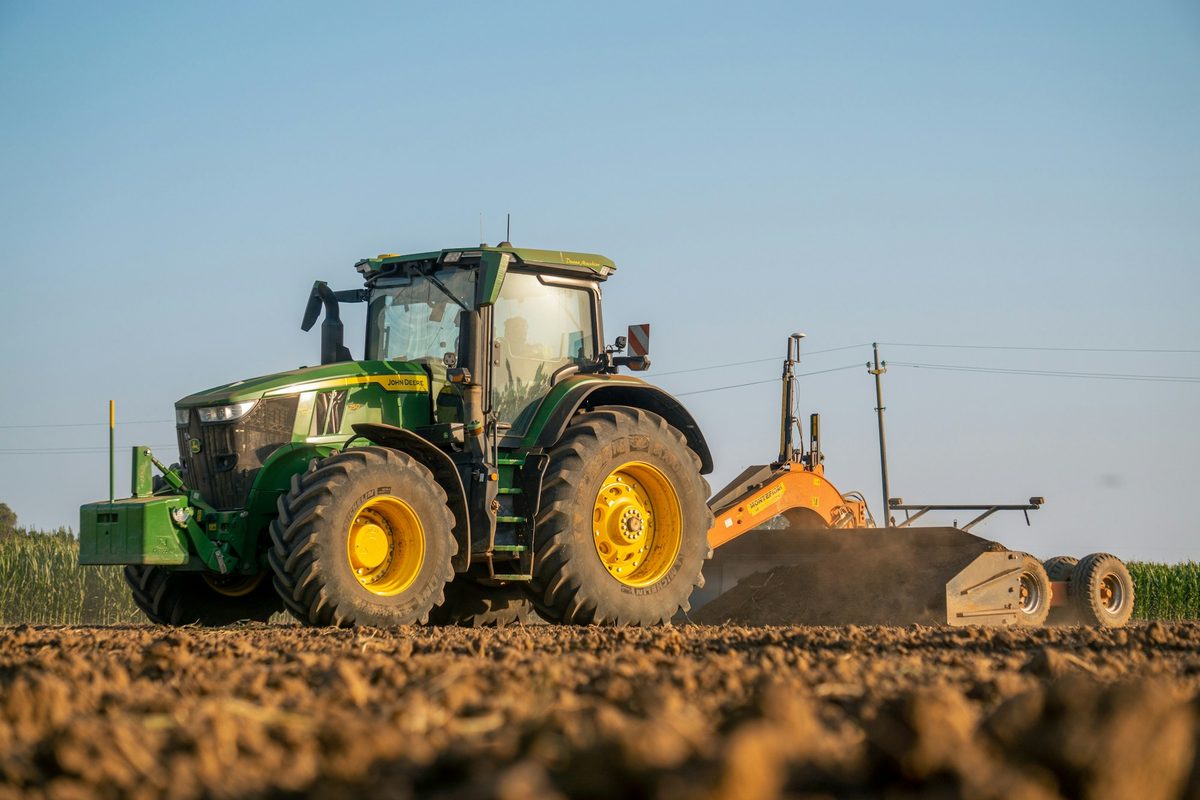
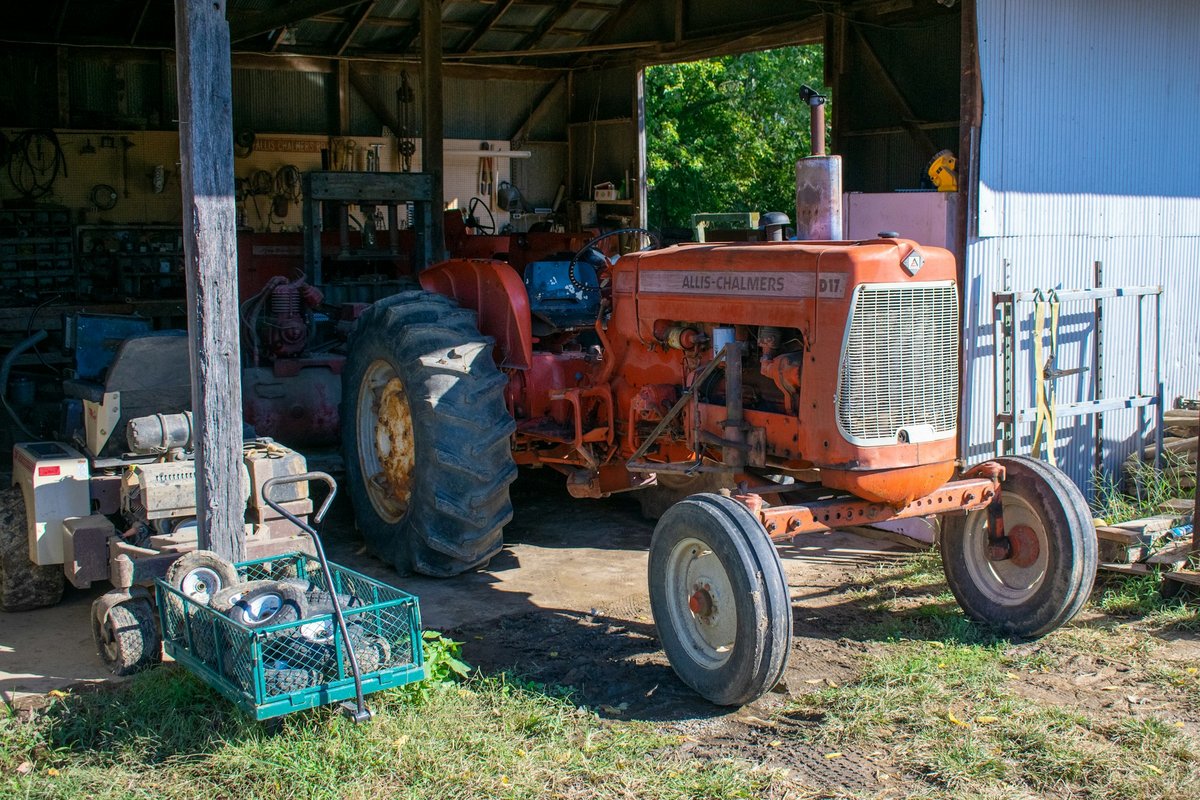
- Parked machines left safe: on level ground, handbrake on, implements and loaders lowered to the ground, engine off, key out
- Nothing propped up on a jack or a block without a proper stand
- PTO shafts guarded, the guard intact and turning freely, not split or held on with baler twine
- Guards on everything else that turns: belts, chains, augers, mixer wagons
- Hydraulic hoses: no weeping, no cracked outer cover, no rubbing on the frame
- Tractors: rollover protection in place and seatbelts working. That's the daily job of the tractor pre-start, but the walk checks that it's happening.
- Shed structure: doors that close and stay closed, no loose cladding to come off in wind, stacked bales stable and not leaning
Important
Lowered, braked, off, key out. Most machinery deaths on farms happen to someone working on, or near, a machine that moved or started. A machine parked safely is a machine that can't.
3. The workshop
- Grinders: guards and tool rests set, eye protection by the machine
- Welding: screens, extraction or ventilation, and nothing flammable nearby
- Compressors and pressure vessels: inspected, gauges working, hoses sound
- Electrics: RCD protection on sockets, no damaged leads, no extension cables daisy-chained across a wet floor
- Fuel and solvents stored away from hot work
- A fire extinguisher you can reach, in date
4. Anything at height
Falls are one of the biggest killers on farms, and the classic one is through a fragile roof.
- Fragile roofs: are they marked as fragile, and is there a rule that nobody walks on them without crawling boards and fall protection?
- Rooflights, which look like roof until someone steps on one
- Ladders: sound, footed or tied, the right length, not a home-made extension
- Bale stacks: built stable, and a safe way up and down that isn't climbing the face
- Grain bins and silos: ladders and platforms guarded, and access controlled
- Telehandlers and loaders used to lift people: only with a proper work platform made for it
5. Livestock handling
- Handling facilities: crush and race in good repair, gates that latch, nothing broken that an animal could push through
- Escape routes out of every pen where people work with cattle
- Bulls: housed or penned securely, warning signs where a public path is near
- Cows with calves: recognised as a risk, especially near footpaths
- Loading ramps: non-slip, side gates working
6. Chemicals, fuel and medicines
- Pesticide and chemical store: locked, ventilated, in a bunded area that would hold a spill, and labelled on the outside
- Every container in its original, labelled packaging. Nothing decanted into a drinks bottle.
- Safety data sheets available, and the PPE they call for in the store and in good condition
- Veterinary medicines: stored as the label says, needles in a sharps container
- Fuel tanks: bunded or double-skinned, no leaks, nozzle locked, away from watercourses and drains
- Gas bottles: upright, secured, in a ventilated place
7. Slurry, grain and other confined spaces
- Slurry pits, lagoons and reception pits: fenced or covered, with lifebuoys or throw lines near open lagoons
- Mixing slurry: everyone out of the building, doors open, a rule that's followed. Slurry gas (hydrogen sulphide) can kill within seconds at high concentration.
- Grain bins and silos: a rule that nobody enters while grain is moving or bridged, and that nobody enters alone
- Any tank, pit or bin someone might climb into: treated as a confined space, with a plan for getting them out
8. Electricity and overhead power lines
- Overhead lines: marked on a farm map, and known by everyone who drives tipping trailers, sprayers with folding booms or loaders
- Clearance: no stacking, loading or tipping under lines
- Buried cables marked before anyone digs
- Farm electrics: RCD protection, covers on junction boxes and sockets, no damaged cable where livestock or machinery reach it
9. Water, people and emergencies
- Deep water (ponds, reservoirs, lagoons) fenced where children could reach
- First aid kits where people work, stocked
- Emergency information: the farm's address and how to find the right gate. A postcode alone often doesn't get an ambulance to a farm, so keep a grid reference or what3words location by the phone.
- Lone working: anyone working alone checks in, and someone knows when to expect them back
- Training: people who drive or operate machinery are trained for it, and the young or new are supervised
What most farm safety walks get wrong
They walk the yard and stop. The yard is visible. The fragile roof, the slurry pit, the chemical store behind the workshop are where the deaths happen, and they get skipped because they're out of the way.
They see what they've always seen. A PTO guard held on with twine for three years stops looking like a problem. Walking with someone new, or someone who doesn't work there every day, helps.
The findings go nowhere. A list in a notebook in the farm office isn't action. Each finding needs a person, a date, and a check that it's done.
No photo. A photo of the broken crush gate settles whether it was fixed, and shows a new worker exactly what "the gate by the race" means.
Doing it on site
A farm safety walk happens in wellies with a dog at your heels, gloves on, and usually in the rain. Nobody fills in a form on a phone in that, which is why so many walks end up as a mental note.
Speak while you walk, and the document the law or the client wants writes itself. Say what you see — "Main shed, mixer wagon PTO guard split, photo. Loader left raised on the Massey, lowered it. Chemical store unlocked, padlock broken, photo." — and the inspection is written, dated and photographed by the time you're back at the house, with every finding ready to give to someone.
Key Takeaway
There's no dedicated farm safety walk template yet. For now, the free heavy equipment inspection and working at heights inspection cover two of the biggest risks, and fill in on a phone. In the ReportWalk app you can build your own farm walk template on your phone, section by section, in the order you walk the place. First walks free.
Related
- Tractor pre-start checklist — the daily machine check before work starts
- Take 5 examples — the one-minute check before a specific task
- Heavy equipment inspection — free template for plant and machinery
- Working at heights inspection — free template for roofs, ladders and platforms
- Ladder inspection — free template, before anyone climbs
Frequently asked questions
What should a farm safety inspection checklist cover? The yard and vehicle movements, sheds and parked machinery (guards, PTO shafts, machines left lowered and switched off), the workshop, work at height and fragile roofs, livestock handling facilities, chemical, fuel and medicine stores, slurry, grain and other confined spaces, overhead power lines and electrics, water hazards, and emergency arrangements.
How often should a farm safety walk be done? Often enough that hazards don't settle into the background. Many farms do a full walk every month or every season, plus a quick look whenever something changes, such as new machinery, new buildings, new workers or the start of a busy season.
What are the biggest causes of death on farms? In Great Britain the recurring causes are being struck by moving vehicles, contact with machinery, falls from height (especially through fragile roofs), being injured by animals, and being trapped by something collapsing or overturning.
What is a safe stop on a farm? A routine for leaving a vehicle or machine: handbrake on, controls in neutral, engine off and key out, with any implements or loaders lowered. It stops the machine moving or starting while someone is working near it.
Is a farm safety walk the same as a risk assessment? No, but they work together. A risk assessment looks at a task or activity and decides how to control the risk. A safety walk checks that the controls are actually in place on the ground today, and finds the hazards nobody wrote down.
Who should do the farm safety walk? Ideally the person responsible for the farm together with someone who works on it every day. A fresh pair of eyes, such as a new worker, a family member or a neighbour, helps catch what regulars stop seeing.