How Much Does a Termite Inspection Cost? Pricing Guide for Inspectors
Termite inspection cost is one of those questions that sounds simple but isn't. As an inspector, you need to understand pricing from two angles: what the market charges (so you can price competitively) and what the inspection actually involves (so you can price profitably).
A termite inspection — more accurately called a Wood Destroying Insect (WDI) inspection or Wood Destroying Organism (WDO) inspection depending on your state — is one of the most valuable ancillary services you can add to your home inspection business. It's required for many mortgage transactions, adds revenue to every job, and once you're trained, adds only 15-30 minutes to your on-site time.
Here's the full breakdown: what to charge, what's involved, and how to build this into a profitable service.
What Does a Termite Inspection Cost? National Averages
Let's start with what homeowners and buyers are paying nationally:
| Service | Typical Cost Range |
|---|---|
| Standalone termite/WDI inspection | $75 – $150 |
| WDI inspection bundled with home inspection | $50 – $100 (add-on) |
| Termite inspection for real estate transaction (NPMA-33 form) | $75 – $125 |
| Annual termite inspection (existing treatment plan) | $100 – $175 |
| Termite inspection + moisture inspection | $125 – $200 |
Note
The average standalone termite inspection costs about $100 nationally. When bundled with a home inspection, the add-on fee typically runs $50-$75. That's $50-$75 of nearly pure profit on a service that adds minimal time to your inspection.
Regional Pricing Differences
Termite inspection costs vary significantly by geography — and the variation maps directly to termite pressure:
High Termite Pressure (Southeast, Gulf Coast, Hawaii):
- Standalone: $85 – $150
- Add-on: $60 – $100
- Higher prices because inspections are more detailed and findings are more common
- Florida, Texas, Louisiana, Georgia, South Carolina, Alabama
Moderate Termite Pressure (Mid-Atlantic, Midwest, Southwest):
- Standalone: $75 – $125
- Add-on: $50 – $75
- Ohio, Virginia, North Carolina, Tennessee, Arizona, California
Lower Termite Pressure (Northern States, Mountain West):
- Standalone: $65 – $100
- Add-on: $40 – $65
- Still required for many transactions — termites exist everywhere except Alaska
- Minnesota, Wisconsin, Michigan, Montana, Colorado
What a Termite Inspection Actually Involves
If you're pricing this service, you need to understand exactly what you're delivering. A WDI inspection isn't a pest control visit — it's a systematic evaluation of accessible areas for evidence of wood destroying insects and organisms.
What You're Looking For
Wood Destroying Insects (WDI):
- Subterranean termites: Mud tubes on foundation walls, damaged wood with soil in galleries, swarm evidence (discarded wings near windows)
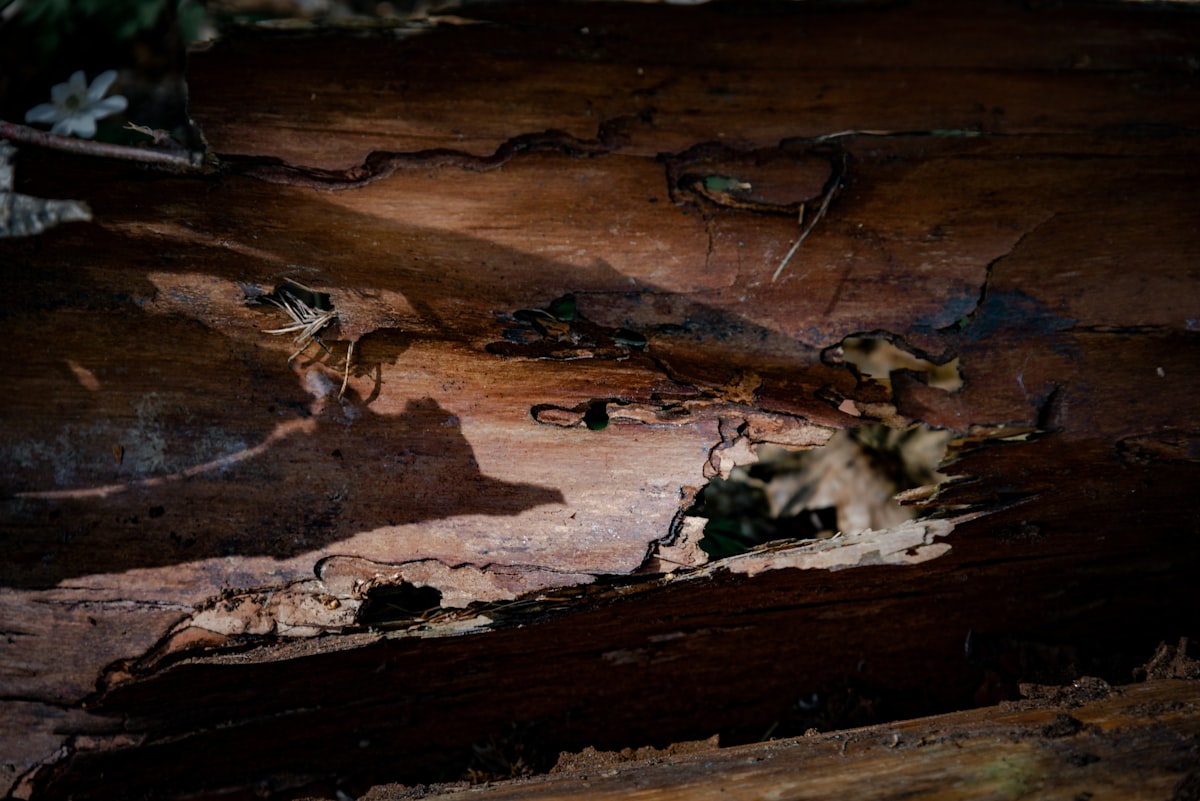
- Drywood termites (primarily Southeast and coastal areas): Frass (small pellets) below kick-out holes in wood, damaged wood with clean galleries
- Carpenter ants: Frass (sawdust-like debris, no soil), smooth-walled galleries in wood, visible ant activity
- Carpenter bees: Perfectly round ½-inch holes in wood trim, fascia, deck rails
- Powder post beetles: Fine powder below small exit holes (1/32 to 1/8 inch) in hardwood
Wood Destroying Organisms (WDO) — required in some states:
- Wood decay fungi (dry rot, wet rot): Soft, spongy, or crumbling wood; visible fungal growth; discoloration
- Moisture damage contributing to wood deterioration
The Inspection Protocol
A thorough termite inspection follows a systematic path through the property:
1. Exterior Perimeter
- Walk the entire foundation perimeter looking for mud tubes, wood-to-soil contact, and conducive conditions
- Check foundation walls from grade to sill plate (if visible)
- Inspect exterior wood elements: trim, fascia, soffits, deck posts, porch columns, window frames
- Note any wood-to-soil contact (the #1 conducive condition for subterranean termites)
- Check expansion joints, utility penetrations, and any crack or gap in the foundation
2. Interior — Basement/Crawl Space
- This is where you'll find most evidence. Bring a good flashlight and a probing tool
- Check sill plates, rim/band joists, and floor joists for damage and mud tubes
- Probe suspicious wood with a screwdriver or awl — termite-damaged wood gives way easily
- Look for shelter tubes on foundation walls, piers, and plumbing/utility penetrations
- Check stored wood, cardboard boxes, or other cellulose material in contact with or near soil
3. Interior — Living Space
- Check baseboards, door frames, and window sills on the lowest level
- Look for swarm evidence: piles of discarded wings, emergence holes
- Check bathrooms and kitchens — anywhere moisture and wood intersect
- Inspect garage (if attached), especially where wood framing meets the slab
4. Attic (if accessible)
- Drywood termite evidence: frass accumulation, kick-out holes in rafters or sheathing
- Carpenter ant activity: frass below roof framing, visible ants
- Moisture-related wood decay that creates conducive conditions
Time Investment
For an experienced inspector, a WDI inspection adds:
- 15-20 minutes when bundled with a home inspection (you're already accessing these areas)
- 30-45 minutes as a standalone inspection
- Additional time for documentation and report writing
The NPMA-33 Form
For real estate transactions, the standard document is the NPMA-33 (National Pest Management Association form). Lenders — especially VA and FHA — require this specific form.
The NPMA-33 requires you to document:
- Visible evidence of WDI/WDO
- Visible damage from WDI/WDO
- Conducive conditions
- Areas that were obstructed or inaccessible (and why)
- Any previous treatment evidence (drill holes, treatment tags, bait stations)
Key Takeaway
The NPMA-33 form is simple but legally significant. Every box matters. "No visible evidence" means you looked and found nothing — not that you didn't look. If you couldn't access an area, mark it as inaccessible. Never assume what you can't see.
Licensing and Certification Requirements
This is critical: you cannot perform termite/WDI inspections without proper authorization in most states. The requirements vary:
- Many states require a pest control operator's license or a WDI-specific license
- Some states allow home inspectors to perform WDI inspections with additional training/certification
- A few states require you to work under or in association with a licensed pest control company
Check your state's Department of Agriculture (most common regulatory body for pest-related inspections) or your state's home inspector licensing board.
Common certification paths:
- State WDI license (varies by state — often 40-80 hours of education plus an exam)
- Associate Certified Entomologist (ACE) through the Entomological Society of America
- Training through pest control associations — NPMA, state pest control associations
Pricing Your Termite Inspection Service
Now the practical part: what should you charge?
Pricing Strategy
If bundling with home inspections (recommended):
- Add $50-$100 to your standard home inspection fee
- Offer it as a standard add-on on your booking page
- Many inspectors make it the default: "Home inspection includes WDI inspection" at a bundled price
- Your marginal cost is minimal — you're already on-site, already accessing these areas
If offering standalone inspections:
- Price at $75-$150 depending on your market
- Factor in drive time, on-site time, and report time
- Standalone inspections are less time-efficient than bundled — price accordingly
For annual inspection contracts (if your licensing allows):
- $100-$175 per annual inspection
- Recurring revenue — these clients come back every year
- Often leads to referrals when they sell or their neighbors need inspections
The Revenue Math
Let's say you do 300 home inspections per year (a solid full-time workload):
- If 60% of clients add a WDI inspection at $65: 300 × 0.60 × $65 = $11,700/year
- If 80% add it (because you make it the default): 300 × 0.80 × $65 = $15,600/year
That's $12,000-$16,000 in additional annual revenue for a service that adds 15-20 minutes per inspection. Compare that to the cost of getting certified ($500-$1,500 one-time) and the math is obvious.
What Inspectors Get Wrong About Termite Inspections
Mistake 1: Rushing the Crawl Space
Termite evidence in crawl spaces is often subtle — a mud tube the diameter of a pencil on a dark foundation wall, frass mixed into dirt, damaged wood that looks fine from a distance. You have to get close and use your flashlight systematically. Scan every wall, every pier, every joist. The inspector who crawls to the middle and does a quick 360 with a flashlight misses things.
Mistake 2: Ignoring Conducive Conditions
Even when you find no evidence of active infestation, conducive conditions are reportable findings. Wood-to-soil contact, excessive moisture, improperly stored firewood against the foundation, mulch piled against siding — these are the precursors to termite problems. Document them.
Mistake 3: Not Documenting Inaccessible Areas
If finished walls, stored items, or insulation prevent you from seeing the sill plate or foundation wall, note it on the NPMA-33. "Inaccessible due to stored personal property along east foundation wall" protects you if termites are later found in that exact area.
Mistake 4: Confusing Ant Frass with Termite Frass
Carpenter ant frass is coarse, like wood shavings mixed with insect parts. Drywood termite frass is fine, uniform, six-sided pellets. They look completely different up close but can be confused at a glance. When in doubt, collect a sample and examine it closely. This distinction matters — it changes the recommendation.
Documenting Termite Findings Efficiently
Termite inspections generate specific, detail-heavy documentation. You need to record:
- Exact location of evidence (which wall, which joist bay, how far from the corner)
- Type of evidence (live insects, mud tubes, frass, damaged wood, swarm evidence)
- Extent (linear feet of mud tubes, approximate area of damage)
- Photos — close-ups of evidence plus wider shots showing location context
This documentation challenge is similar to what inspectors face with mold inspection findings — precise location data, visual evidence, and clear descriptions all captured while you're in awkward positions with limited lighting.
Many inspectors have moved to voice-based documentation for exactly this reason. Tools like ReportWalk let you dictate findings while you're in the crawl space — "subterranean termite mud tube, east foundation wall, approximately 3 linear feet, extending from grade to sill plate, tube is active based on visible workers" — and the app structures it into a report automatically. When you're on your hands and knees with a flashlight in your mouth, voice beats typing every time.
However you document, the standard is the same: specific enough to be defensible, clear enough to be actionable, and complete enough that anyone reviewing your report knows exactly what you found and where you found it.
Termite Treatment: What Inspectors Should Know (But Not Recommend)
As an inspector, you identify the problem. You don't prescribe the solution. But understanding treatment options helps you discuss findings with clients intelligently:
- Liquid soil treatment: $1,500-$3,000 for a typical home. Creates a chemical barrier around the foundation. Most common treatment method.
- Bait station systems: $2,500-$4,000 installation plus $200-$400/year monitoring. Stations placed around the perimeter that termites feed on and carry back to the colony.
- Spot treatments: $200-$600 for localized infestations. Appropriate when damage is isolated and limited.
- Fumigation (drywood termites): $1,500-$5,000+. Entire structure tented and treated. Primarily Southeast and coastal areas.
Note
Never recommend a specific pest control company. It creates a conflict of interest and potential liability. Your job is to identify evidence and recommend evaluation by a licensed pest control professional. Let the client choose their provider.
Adding WDI Inspections to Your Business: Action Steps
- Check your state's requirements for WDI inspection licensing
- Complete the required training — typically 40-80 hours plus exam
- Get your credentials — state license, NPMA certification, or whatever your state requires
- Update your insurance — confirm your E&O and GL policies cover WDI inspections
- Add it to your booking process — make it easy for clients to add (or default it in)
- Price it right — competitive with your market but profitable for your time
- Practice your identification skills — attend entomology workshops, study specimen photos, learn to distinguish species by evidence type
The home inspection cost structure we covered previously gives you the framework for pricing all your services together. WDI inspections fit naturally into that pricing model as a high-value, low-effort add-on.
Bottom Line
A termite inspection typically costs $75-$150 standalone or $50-$100 as an add-on to a home inspection. For inspectors, it's one of the best ancillary services available — relatively quick to perform, always in demand (especially for financed transactions), and adds meaningful revenue to every inspection.
Get certified, get insured, and start offering it. The bugs are already there. Someone's going to inspect for them. It might as well be you.