Stucco Inspection: How to Spot Moisture Damage Before It Gets Expensive
Stucco looks great until it doesn't — and by the time you can see the damage from the street, there's usually ten times more hidden behind the wall. A solid stucco inspection checklist is one of the most valuable tools in a field inspector's kit because stucco failures don't announce themselves. They rot quietly, and the repair bills run into five and six figures.
If you inspect homes in the Southwest, Southeast, Mid-Atlantic, or anywhere stucco is a common exterior cladding, moisture damage behind stucco walls is something you'll encounter regularly. This guide covers everything you need to assess stucco in the field: the differences between traditional stucco and EIFS, the visual signs that point to hidden moisture problems, probe testing methodology, critical flashing details, and when you need to recommend invasive testing.
Let's get practical.
Traditional Stucco vs. EIFS: Know What You're Looking At
Before you start documenting cracks, you need to know which system you're inspecting. Traditional hard-coat stucco and EIFS (Exterior Insulation and Finish System) look similar from the street but behave very differently when water gets involved.
Traditional (Hard-Coat) Stucco
Traditional stucco is a cement-based plaster system applied in three coats over wire lath:
- Scratch coat — first layer, scored to create texture for the next coat
- Brown coat — second layer, leveled to create a flat surface
- Finish coat — final layer with color and texture
Total thickness: approximately ¾ inch. The system is rigid, hard, and relatively durable. When you tap it, it sounds solid.
How it handles water: Traditional stucco is not waterproof. It absorbs water and is designed to dry out. Behind the stucco, there should be a weather-resistant barrier (WRB) — usually two layers of building paper or a synthetic housewrap — that acts as the actual waterproofing layer. A drainage plane or air gap between the stucco and the WRB allows water to drain down and out through weep screeds at the base.
When it fails: Problems start when the WRB is improperly installed, damaged, or missing — or when there's no drainage plane and the stucco bonds directly to the WRB, trapping moisture against the sheathing.
EIFS (Exterior Insulation and Finish System)
EIFS — sometimes called "synthetic stucco" or by the brand name Dryvit — is a multi-layer system:
- Adhesive or mechanical fasteners — attach insulation to the substrate
- Expanded polystyrene (EPS) insulation board — 1-4 inches thick
- Base coat with fiberglass mesh — reinforcement layer
- Finish coat — textured, colored acrylic finish
Total thickness: 1.5-5 inches (including insulation). When you tap it, it sounds hollow — this is the quickest field distinction.
Note
The "tap test" is your fastest tool: tap the wall with your knuckles. Traditional stucco sounds solid and hard. EIFS sounds hollow and slightly flexible. This distinction matters because EIFS failures tend to be more catastrophic — trapped moisture behind the insulation board can go undetected for years while it destroys the sheathing and framing behind it.
How it handles water: Modern EIFS systems (post-2000ish) typically include a drainage plane behind the insulation. Older "barrier" EIFS systems relied on the finish coat being completely waterproof with no drainage — and they failed spectacularly. If you're inspecting a 1990s-era home with EIFS, treat it with extra scrutiny.
When it fails: EIFS failures typically occur at penetrations (windows, doors, lights, hose bibs), where sealant joints break down, or where the system terminates at decks, roofs, or grade level. Once water gets behind EIFS, it has almost no way to dry — the insulation board acts as a vapor barrier, trapping moisture against the sheathing.
Visual Signs of Moisture Damage: Your Field Checklist
You can't see through walls, but stucco gives you plenty of surface clues if you know what to look for. Here's your stucco inspection checklist for visual assessment. For broader exterior coverage, cross-reference our exterior inspection checklist.
Staining and Discoloration
- Dark streaks below windows, doors, or penetrations — water running down the wall surface, often indicating failed sealant or flashing
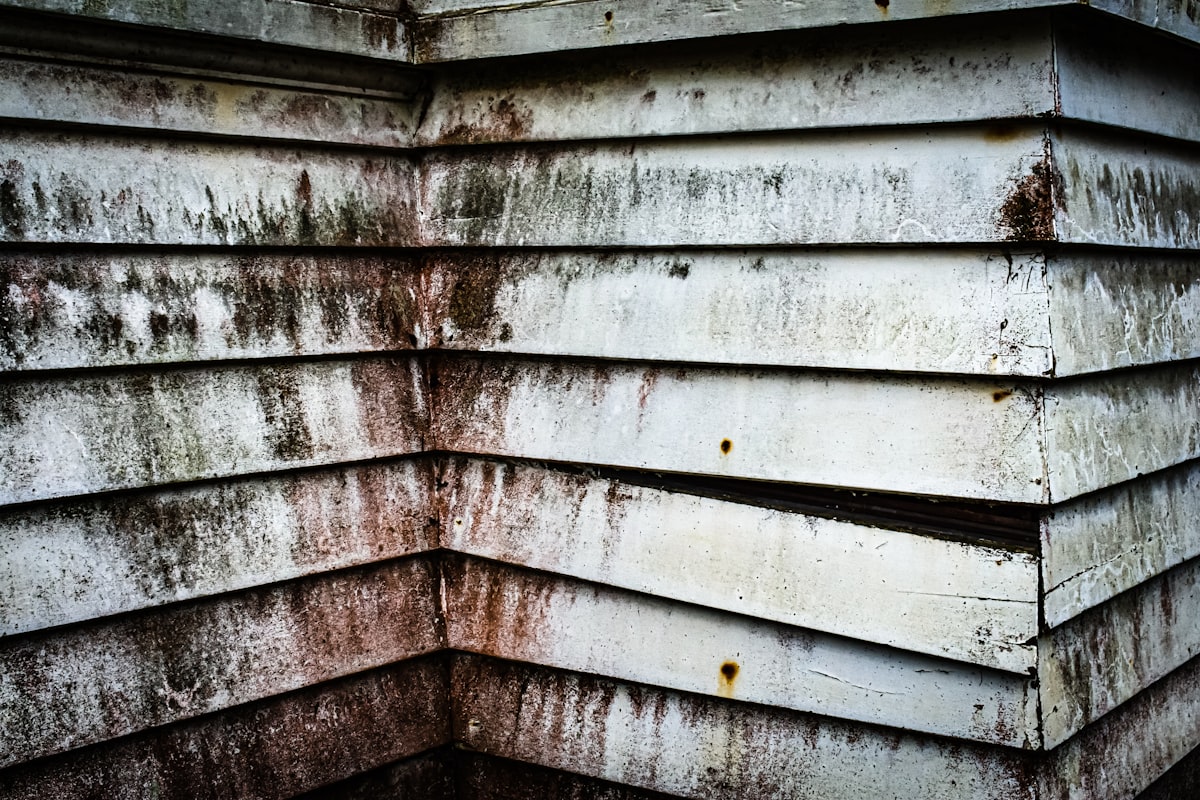
- Green or dark patches — algae or mold growing on the surface, indicating chronic moisture
- White mineral deposits (efflorescence) — salts carried to the surface by water moving through the stucco matrix. This is a clear indicator of moisture movement.
- Rust stains — from corroding lath wire, metal flashing, or fasteners behind the stucco. If you see rust bleeding through, there's moisture behind the surface.
Cracking Patterns
Not all stucco cracks are equal. The pattern tells you the story:
- Hairline cracks (< 1/16 inch) — Normal shrinkage in hard-coat stucco. Low concern unless concentrated around openings or at intersections.
- Pattern cracking (map cracking/spider webbing) — Network of fine cracks across a large area. Often caused by improper curing, over-sanding the finish coat, or applying the finish coat too thin. Mostly cosmetic unless extensive.
- Diagonal cracks at window/door corners — Stress cracks from structural movement or settlement. Also common at header points. Check for foundation issues — see our foundation inspection guide.
- Horizontal cracks along a line — Often indicates a problem at a floor line, where different materials meet, or where the WRB was improperly lapped.
- Wide cracks (> 1/8 inch) — These are water entry points. Document and recommend sealing at minimum.
- Cracks along the perimeter of patches or repairs — Previous repair work that's failing again, suggesting an ongoing underlying issue.
Bubbling, Blistering, and Delamination
- Bubbles or blisters in the finish coat — Moisture trapped behind the surface is pushing the finish coat off. This is a significant finding.
- Soft spots — Areas where the stucco gives when pressed, especially on EIFS. Indicates deteriorated substrate.
- Hollow-sounding areas on traditional stucco — Delamination between stucco layers, meaning the stucco has separated from the lath or the brown coat from the scratch coat.
Key Takeaway
Gently push on suspect areas with your palm — don't use a tool that could damage the surface. If traditional stucco feels soft or gives, the substrate behind it is compromised. If EIFS flexes more than the surrounding areas or feels spongy, there's moisture damage. Always document soft spots with photos and precise locations.
Surface Texture Changes
- Areas where the texture is different from surrounding stucco — usually indicates a previous repair, which itself may indicate a previous problem
- Paint peeling or flaking on specific areas while the rest is intact — localized moisture behind the paint
- Swelling or bulging — substrate expansion from moisture absorption
Critical Flashing Details: Where Stucco Failures Start
Most stucco moisture failures aren't caused by water going through the stucco surface. They're caused by water getting behind the stucco at transitions, penetrations, and terminations. These flashing details are where you should focus your sharpest attention.
Kickout Flashing (Diverter Flashing)
This is the single most important flashing detail on any stucco home, and it's the one most commonly missing.
What it does: Where a roof meets a sidewall, water runs down the roof slope and hits the wall. Kickout flashing diverts that water into the gutter instead of letting it run behind the stucco.
What happens without it: Water pours behind the stucco cladding at the roof-wall intersection, saturating the WRB, sheathing, and framing. This is the #1 cause of catastrophic stucco moisture failures.
What to document:
- Is kickout flashing present at every roof-to-wall intersection? (It's often missing.)
- Is it properly formed — extending far enough to direct water into the gutter?
- Is there evidence of moisture damage at roof-wall intersections where kickout flashing is absent?
- Are there stains, soft spots, or deterioration on the wall below the roofline?
Weep Screeds
Weep screeds are metal J-channels installed at the bottom of stucco walls, typically 2-4 inches above grade or above a roof-to-wall transition.
What they do: They terminate the stucco system and allow moisture that drains down behind the stucco to weep out at the bottom.
What to document:
- Is the weep screed present at the bottom of all stucco walls?
- Is there a visible gap at the bottom edge where water can exit? (Often sealed shut with caulk or covered by landscaping — both are problems.)
- Is the weep screed at least 2 inches above grade? (Many are buried by soil, mulch, or concrete.)
- Is there evidence of staining or moisture at the weep screed area?
Note
A sealed or buried weep screed is like a drain with a plug in it. Any moisture that gets behind the stucco has nowhere to go except into the sheathing and framing. If you see weep screeds caulked shut, covered by concrete, or buried below grade, call it out — this is a significant deficiency.
Window and Door Intersections
Windows and doors are the most common water entry points in stucco walls. The intersection between the window frame and the stucco is a critical detail.
What to document:
- Is there a visible sealant joint between the window/door frame and the stucco? What's its condition?
- Is the sealant cracked, separated, or missing at any point around the perimeter?
- Is there a drip edge or head flashing above windows and doors?
- Is there evidence of moisture damage on the stucco below windows (staining, cracks, soft spots)?
- On the interior, is there evidence of moisture around window/door frames? (Staining on drywall, soft spots, musty smell)
Other Penetrations
Every hole in the stucco is a potential water entry point:
- Hose bibs — often poorly sealed
- Electrical outlets and light fixtures — should be sealed with appropriate gaskets
- Dryer vents — check sealant around the penetration
- Gas meters and pipe penetrations — sealant condition varies
- Deck attachments — ledger board connections through stucco are notorious failure points. The deck-to-house connection is where water enters and rot begins. See our deck inspection guide for more.
Probe Testing Methodology
Moisture meters are essential tools for stucco inspection. Non-invasive testing gives you data without damaging the surface.
Non-Invasive Moisture Testing
Pin-type moisture meters (in scan mode or with external probes) and pinless/RF moisture meters can detect elevated moisture levels through the stucco surface or at the back side of the stucco from the interior.
How to use them:
- Take baseline readings on areas with no suspected moisture issues
- Compare baseline to readings at suspect areas — around windows, below rooflines, near penetrations, at weep screed level
- Elevated readings (relative to baseline) indicate moisture presence
Limitations:
- Surface readings can be affected by recent rain
- Metal lath can interfere with some meter types
- You're measuring relative moisture, not absolute — a reading alone doesn't tell you the source or severity
- EIFS insulation can mask readings
Invasive Probe Testing
Invasive testing involves drilling small holes through the stucco to insert pin-type moisture probes directly into the sheathing. This provides accurate moisture content readings of the substrate.
This is typically NOT your job as a general home inspector. Invasive testing is performed by:
- Certified stucco inspectors
- Moisture assessment specialists
- Engineers specializing in building envelope failure
However, you should know when to recommend it.
When to Recommend Invasive Testing
This is the judgment call that separates competent inspectors from average ones. Here's when you should specifically recommend further evaluation by a qualified stucco/moisture specialist:
Definitely Recommend When:
- Missing kickout flashing at roof-wall intersections — especially on EIFS
- Sealed or buried weep screeds — moisture has no exit path
- Visible soft spots or bubbling — active moisture damage
- Elevated moisture readings at multiple locations
- Staining patterns suggesting water entry at windows, doors, or transitions
- EIFS installed before 2000 without a known drainage system — these are the high-risk systems
- Previous moisture-related repairs visible — patches, re-stuccoed areas
Strongly Consider When:
- Cracking at window corners combined with interior evidence of moisture
- Rust staining through the stucco surface
- Sealant failure at multiple penetrations
- The home is in a high-rainfall area with EIFS cladding
- Buyer is financing with a lender who requires stucco inspection (common in Pennsylvania and other states with known EIFS issues)
Probably Not Needed When:
- Traditional stucco in good condition with proper flashing details visible
- Hairline shrinkage cracks only, no moisture indicators
- Recently installed stucco system (< 5 years) with no visible deficiencies
- Home in an arid climate with traditional stucco and no interior moisture evidence
Documentation Tips for Stucco Findings
Stucco damage is one of the most litigated areas in home inspection. Your documentation needs to be thorough and precise. For general report writing guidance, see our report writing guide.
Photo Documentation
- Wide shots showing the full elevation with affected area in context
- Close-up shots of specific deficiencies (cracks, stains, soft spots, missing flashing)
- Comparison shots — good areas next to problem areas
- Flashing details — or lack thereof. Photos of missing kickout flashing are powerful evidence.
- Weep screed conditions — buried, sealed, or damaged weep screeds
- Interior evidence — stains or damage on interior walls corresponding to exterior findings
Report Language
Be specific and factual. Avoid speculation about what's behind the wall:
Good: "Elevated moisture readings detected at the stucco below the second-floor window on the north elevation (reading: 28% relative, baseline: 12% relative). Staining observed on the stucco surface below this window. Kickout flashing was not observed at the adjacent roof-to-wall intersection. Further evaluation by a qualified moisture assessment specialist is recommended to determine the source and extent of moisture intrusion."
Bad: "Stucco looks like it has water damage. Could be a big problem. Needs fixing."
Also bad: "The wall behind the stucco is likely rotted and will need to be replaced." (You don't know this — you haven't seen behind the wall.)
Key Measurements to Include
- Location of findings (elevation, floor, proximity to windows/transitions)
- Moisture meter readings with baseline comparison
- Crack widths where notable (use a crack gauge or credit card for reference)
- Distance from weep screed to grade
- Dimensions of affected areas when estimable
Common Stucco Issues by Region
Stucco problems vary by geography:
Southwest (Arizona, Nevada, New Mexico)
- UV degradation and surface crazing
- Expansion cracking from extreme temperature swings (120°F to 40°F)
- Monsoon water intrusion at penetrations and transitions
- Stucco-to-grade contact in desert landscaping
Southeast (Florida, Georgia, Carolinas)
- Chronic moisture from humidity and rainfall
- EIFS failures (especially 1990s construction)
- Hurricane-driven rain intrusion
- Mold behind stucco in high-humidity environments
Mid-Atlantic (Pennsylvania, New Jersey, Delaware)
- The epicenter of EIFS litigation in the late 1990s-2000s
- Many homes have been re-clad or remediated, but some haven't
- Freeze-thaw cracking in traditional stucco
- Heavy rainfall combined with aging sealant joints
Pacific Northwest
- Year-round moisture exposure
- Moss and algae growth on stucco surfaces
- WRB failures from sustained moisture loading
Your Field Workflow for Stucco Inspections
Here's a systematic approach for every stucco home:
Exterior walk-around (first pass):
- Identify the system — traditional or EIFS (tap test)
- Note overall condition — good, fair, or poor
- Identify all roof-to-wall intersections — check for kickout flashing
- Locate weep screeds — check for burial, sealing, or damage
- Scan all elevations for staining, cracking, or texture changes
Detailed assessment (second pass): 6. Inspect every window and door perimeter for sealant condition 7. Check all penetrations (hose bibs, lights, outlets, vents) 8. Document all cracks by type and location 9. Probe suspect areas with moisture meter 10. Note any previous repairs or patches
Interior correlation: 11. Check interior walls corresponding to exterior findings 12. Look for staining around windows, especially below sills 13. Check basement/crawlspace rim joist area for moisture evidence 14. Note any musty odors near exterior walls
Report and recommend: 15. Document all findings with photos and measurements 16. Clearly state whether the system is traditional stucco or EIFS 17. Make specific recommendations based on findings 18. Recommend specialist evaluation when criteria are met
Streamline Your Stucco Documentation
Stucco inspections generate more documentation than most systems — you're circling the entire house, noting conditions on every elevation, at every window, at every transition. That's a lot of typing if you're doing it by hand. ReportWalk lets you dictate findings on your iPhone as you walk each elevation, converting your voice observations into structured report sections. "North elevation, second floor, window above garage — sealant cracked along the head and both jambs, staining visible on stucco below sill, recommend specialist evaluation" — said once, documented permanently. Your stucco section writes itself while you keep your eyes on the wall instead of a screen.
Stucco failures are expensive. A full re-clad on a 2,500-square-foot home can run $40,000-$80,000 depending on the extent of sheathing and framing damage behind the cladding. Your job is to catch the warning signs early — before the bubbling under the window becomes a six-figure remediation. Nail the flashing details, use your moisture meter, document what you see, and refer out when the evidence demands it. Your clients are counting on those sharp eyes.